
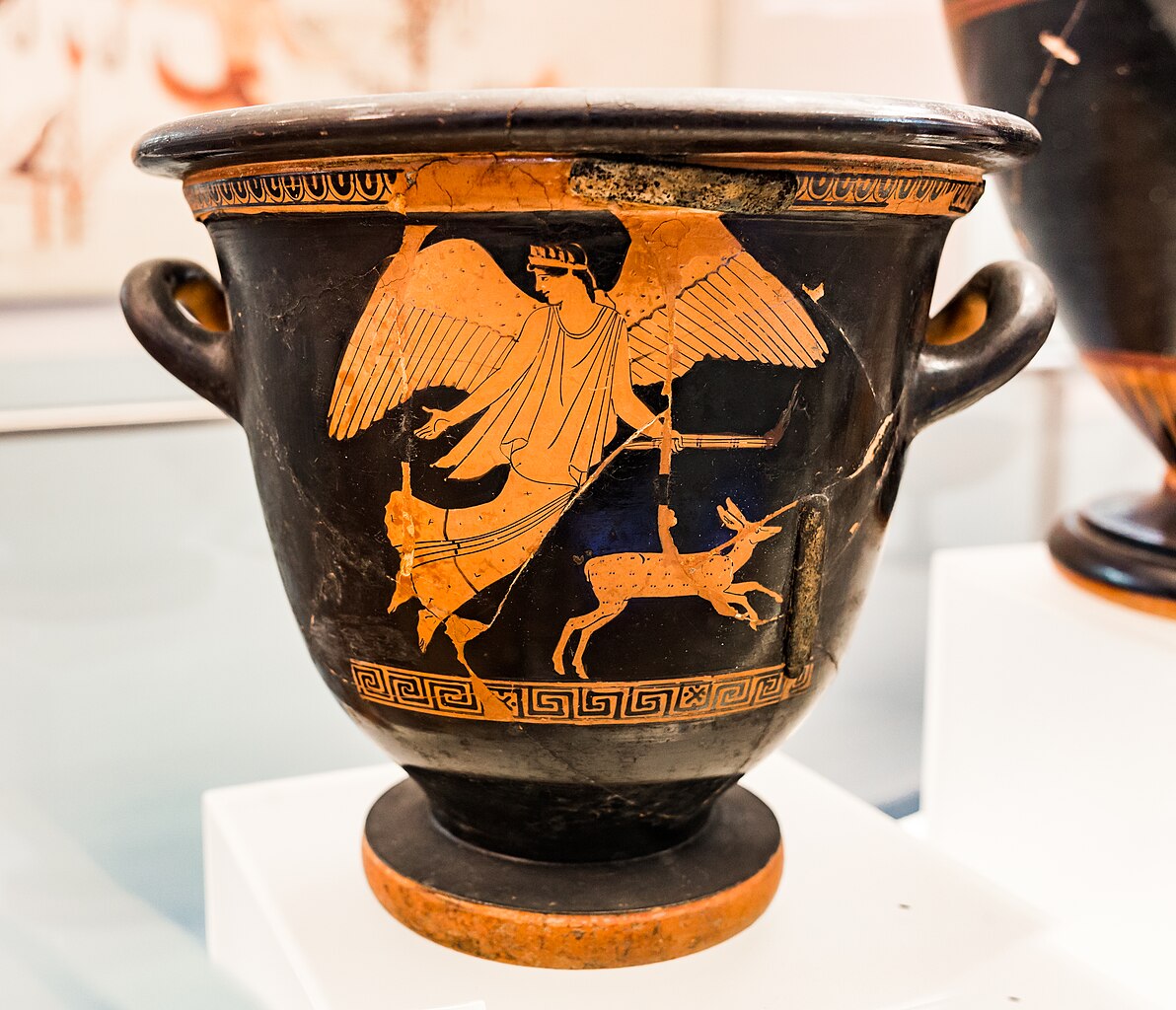
Meet the Achilles painter, the Vatican name vase and his signature Classical style.
To walk through a gallery of ancient Greek pottery is to witness a silent dialogue between clay and history. Among the thousands of artists who shaped this dialogue, few speak with the refined, quiet authority of the Achilles Painter. A titan of the High Classical period (mid-5th century BCE), he transitioned the energetic experimentation of the Archaic age into an era of “classical serenity”, a style that still defines our modern vision of ancient Greece.
In this guide, we’ll explore the world of this anonymous master, whose brushstrokes captured the dignity of heroes and the tender grief of everyday life.
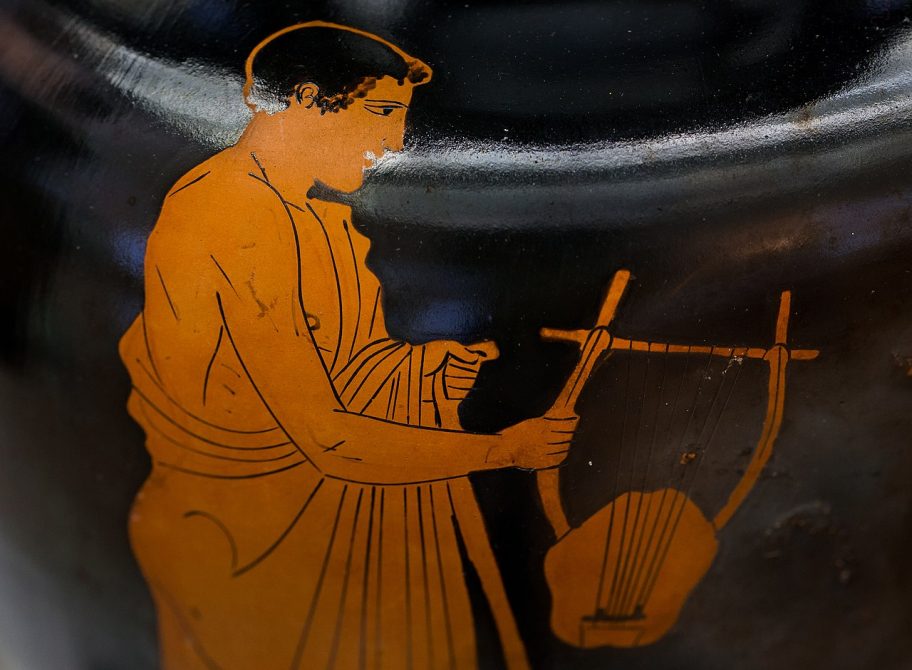
Attic red-figure Nolan neck-amphora (ca. 450–435 BC), attributed to the Achilles Painter: youth offering a lyra to a boy; bearded man with staff on reverse. Staatliche Antikensammlungen, Munich (inv. 2329). Photo: ArchaiOptix, CC BY-SA 4.0 (Wikimedia Commons).
Who Was the Achilles Painter?
Like most artists of the ancient world, the “Achilles Painter” is a name given by modern scholars rather than a historical signature. We recognize his “hand” through a consistent, sophisticated drawing style found on hundreds of vessels.
His conventional name originates from a stunning red-figure amphora currently housed in the Vatican Museums, which features a monumental depiction of the hero Achilles. Active roughly between 470 and 425 BCE, he worked during the height of the Athenian Empire, a time when the city was being rebuilt in marble and its art was reaching a peak of balanced perfection.
The Name Vase – Vatican Amphora
The vessel that gave this artist his identity is a masterpiece of Athenian craftsmanship. Vatican Amphora features the hero Achilles standing in a “statuary” pose. He doesn’t appear in the heat of battle; instead, he is depicted with a noble, almost detached calm that reflects the ethos of the High Classical period.
On the reverse side, we see Briseis performing a libation. The interaction between the two sides of the vase, the warrior and the ritual, showcases the painter’s ability to ground epic mythology in human gestures. The drawing is exceptionally fine, with a confidence in line work that suggests he was as much a draughtsman as he was a painter.
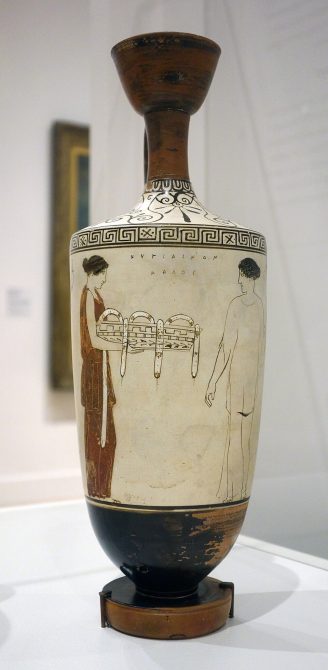
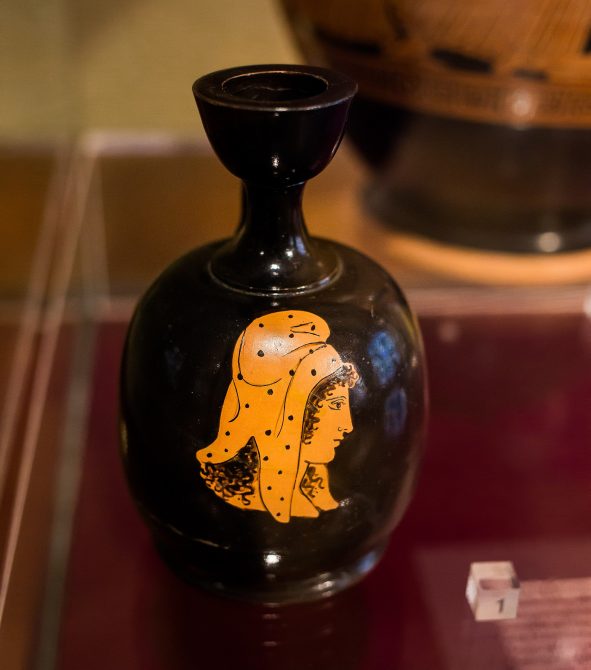
Attic white-ground lekythos (mid-5th century BCE), attributed to the Achilles Painter, Worcester Art Museum (acc. 1900.65). Photo: Mark Landon, CC BY 4.0 (Wikimedia Commons)
Artistic Techniques and Styles
The Achilles Painter was a versatile genius. While many artists specialized in one technique, he moved effortlessly between red-figure, black-figure, and white-ground painting.
Mastery of White-Ground Lekythoi
He is perhaps most celebrated for his work on white-ground lekythoi (oil jars used in funeral rites). On these vessels, the artist applied a white slip to the clay, creating a canvas that allowed for delicate, polychrome colors like dilute browns, yellows, and reds. His white-ground scenes are often intimate and somber, depicting the deceased and their loved ones in moments of quiet mourning. These vases are fragile survivors that offer us a rare glimpse into what ancient Greek wall paintings might have looked like.
Red-Figure Vase Painting Excellence
In the red-figure technique, the Achilles Painter displayed a “noble aesthetic” that many historians compare to the sculptures of the Parthenon. His figures possess a sober beauty; they are physically idealized but emotionally restrained. His fine lines don’t just outline shapes, they suggest volume and grace without the need for over-decoration.
Dating and Active Period
Archaeologists date the Achilles Painter’s career to a fifty-year span from circa 470 to 425 BCE. His “middle phase” (around 450–445 BCE) is considered his peak. During this time, he began decorating larger vessel forms, moving beyond small drinking cups to monumental vases that demanded a grander sense of composition and storytelling.
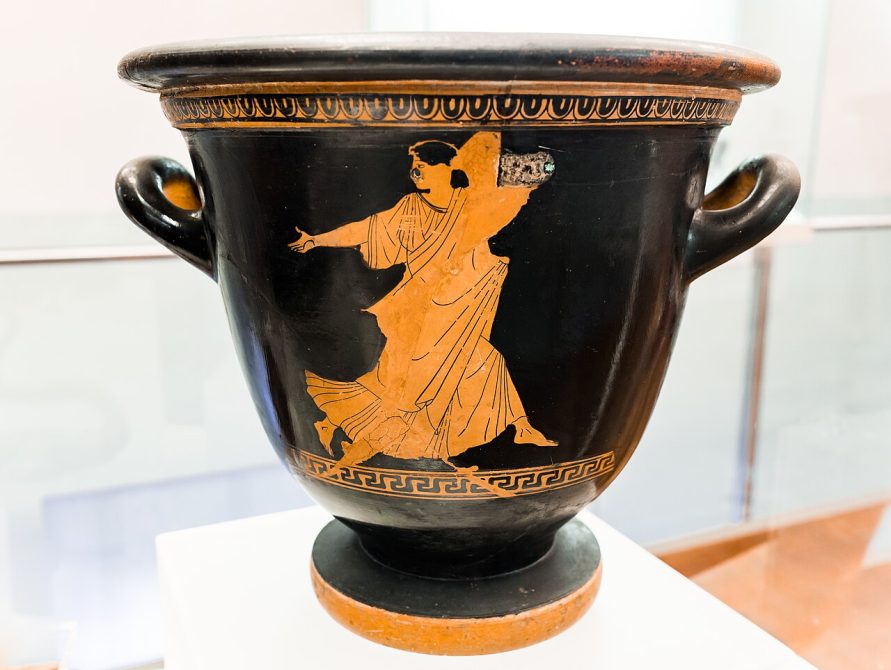
Attic red-figure bell krater (c. 450 BC), attributed to the Achilles Painter, Museo Nazionale Etrusco di Villa Giulia (inv. 25007). Photo: ArchaiOptix, CC BY-SA 4.0 (Wikimedia Commons).
Workshop and Artistic Legacy
No great artist works in a vacuum. The Achilles Painter began as a pupil of the famous Berlin Painter, inheriting a love for isolated, powerful figures. Eventually, he established his own influential workshop in Athens.
He wasn’t just a creator; he was a mentor. His workshop became a breeding ground for the next generation of artists, ensuring that his standards of elegance and technical precision survived well into the late fifth century BCE.
Notable Students and Successors
His influence can be seen in the works of several “recognizable” painters who followed his lead. The Phiale Painter (his most famous student), the Persephone Painter, and the Kleophon Painter all carried forward his legacy. They adopted his refined line work and his interest in the domestic lives of Athenians, though they often added their own twists of movement and emotion.
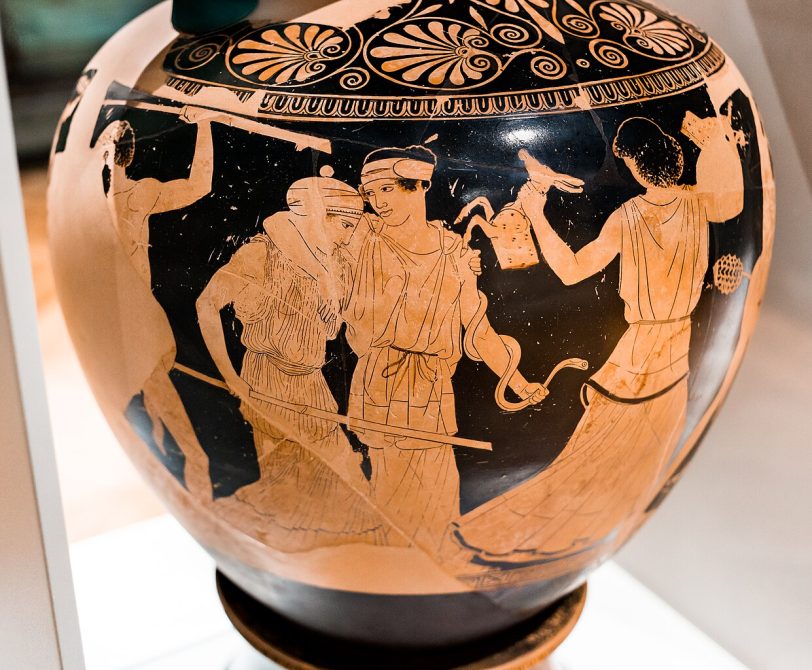
Attic red-figure pointed amphora on stand (ca. 450–445 BC), attributed to the Achilles Painter: Dionysos with satyrs and maenads (wild thiasos). Paris, BnF Cabinet des Médailles (inv. 357). Photo: ArchaiOptix, CC BY-SA 4.0 (Wikimedia Commons).
Subject Matter and Themes
The Achilles Painter’s repertoire was vast. He painted:
- Deities and Heroes: Powerful renditions of Zeus, Athena, and, of course, Achilles.
- Mortal Life: Scenes of athletes and warriors preparing for battle.
- The Domestic Sphere: One of his most famous recurring themes is the “Mistress and Maid” scene. It shows the private lives and relationships of Athenian women.
- Funerary Rituals: Poignant scenes of families visiting graves, bridging the gap between the living and the dead.
Geographic Distribution of Works
The Achilles Painter was the “international superstar” of his day. His vases have been discovered far beyond the borders of Athens, found in excavations across:
- Eretria and Sicily
- Etruria (Modern Italy)
- Egypt and Turkey
Conclusion
The Achilles Painter remains an enduring figure in the history of art because he captured the essence of an age. His work represents the moment when Greek art found its balance. Somewhere between the human and the divine, the epic and the intimate. Whether it is a hero on an amphora or a mourning wife on a funeral jar, his masterpieces remain among the greatest drawings of antiquity.
Image credit (Featured image): “Achilles Painter – ARV 991.63 – Nike with deer – woman – Roma MNEVG 25007 – 01” by ArchaiOptix, licensed CC BY-SA 4.0, via Wikimedia Commons (no changes).