
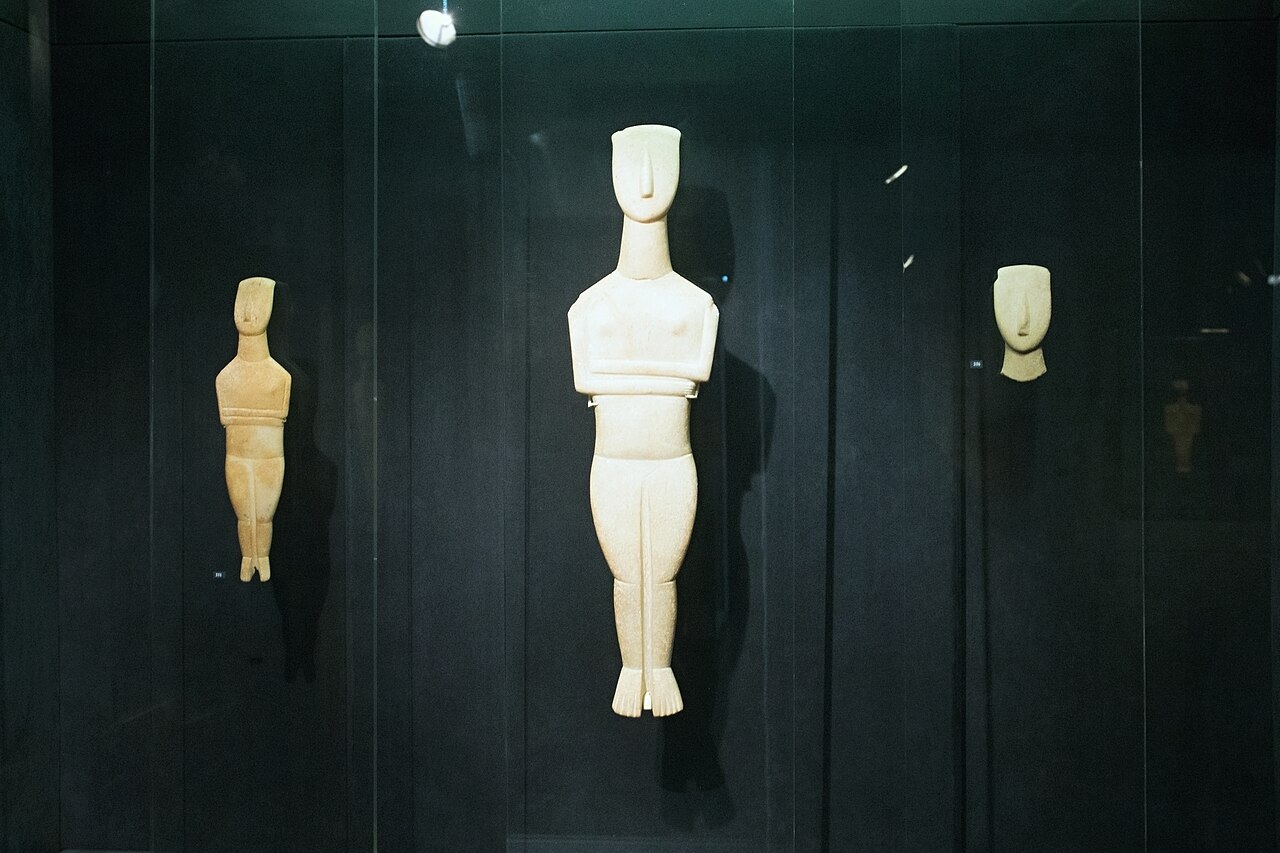
Discover Cycladic Art: its origins, iconic figurines, and what they may have meant.
Key Highlights
- Cycladic art is an ancient art form from the Early Bronze Age, originating in the Cyclades, a group of Greek islands.
- It is famous for its minimalist and elegant marble figures, particularly the iconic folded-arm Cycladic figurines.
- These stunningly simple forms were created during the Early Cycladic period, thousands of years ago.
- The abstract style of these ancient pieces has greatly influenced modern artists like Picasso and Modigliani.
- You can see major collections of this art at institutions like the Museum of Cycladic Art in Athens.
Cycladic Art has a funny way of stopping people mid-step in a museum gallery. The figures are small, calm, and almost shockingly simple, yet they feel familiar, like something you’ve seen in modern sculpture or design. That “modern” pottery look can be misleading, though, because these works come from the Cyclades (a cluster of islands in the Aegean Sea) and belong to the Early Bronze Age world of the third millennium BCE.
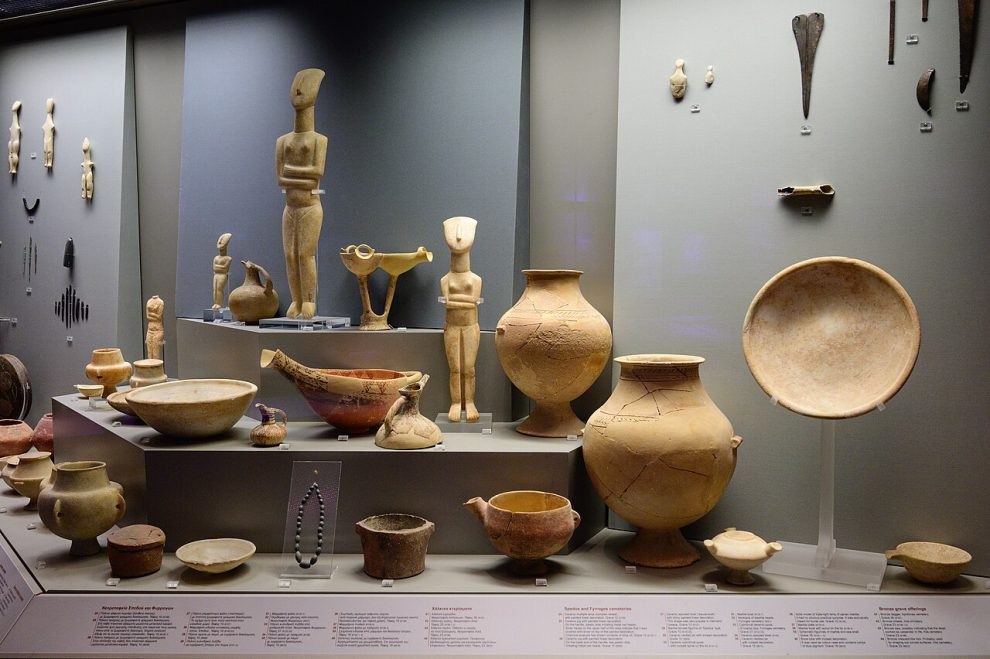
Cycladic Art At a Glance
Cycladic Art is the name we give to the material culture, especially sculpture and carved marble objects, produced in the Cyclades during the Early Bronze Age. When people say “Cycladic Art,” they usually mean the marble figurines: most famously, stylized nude figures with arms folded across the torso, carved with clean contours and a smooth, luminous finish.
So why does it matter? First, because it’s among the earliest distinct sculptural traditions in Europe, and it shows how an island network could develop a shared artistic language while still producing local variations. Second, because these objects have shaped the way later generations imagine “ancient simplicity,” influencing modern taste, collecting, and even museum ethics debates about provenance and looting.
The Cyclades and the Aegean World
The Cyclades sit southeast of mainland Greece, close enough that from many islands you can see another on the horizon, an everyday reminder that travel, exchange, and shared ideas were part of life. This visibility and connectivity helped a common culture develop across the islands in the Early Bronze Age, with trade links reaching the Greek mainland, Crete, and the Anatolian coast.
That Aegean “network effect” is one reason Cycladic Art can feel both consistent and varied at the same time. You’ll see recurring shapes and conventions, especially in figurines, but also differences tied to particular islands, workshops, and periods.
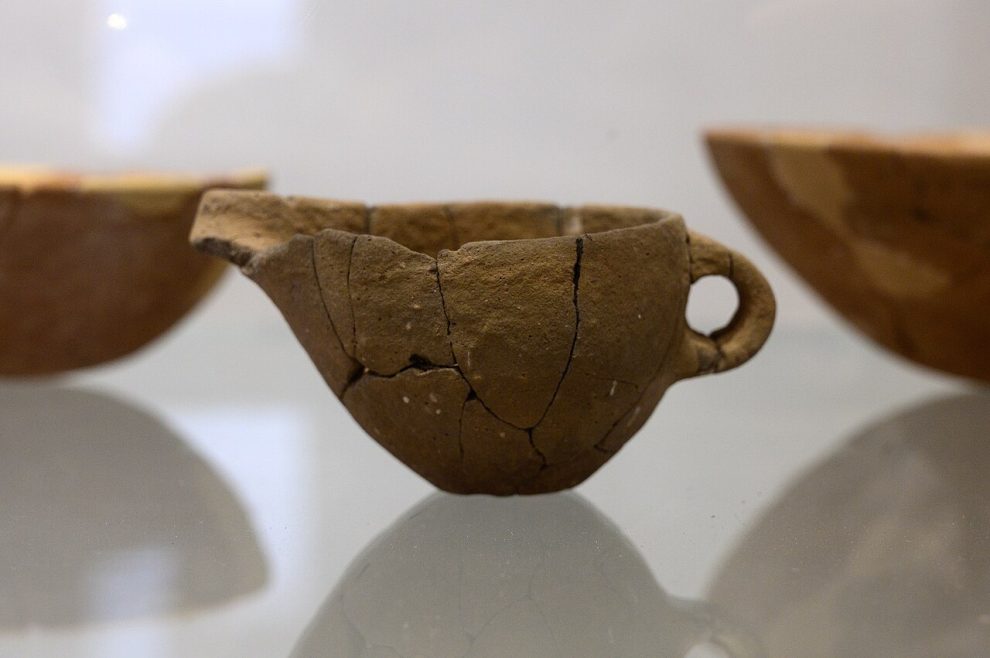
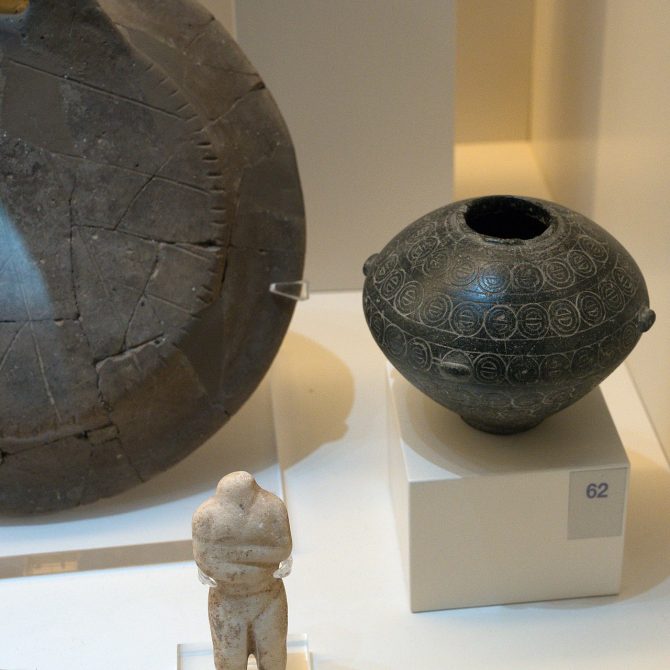
Early Cycladic pottery from Diakoftis, Mykonos (2700–2300 BC), Archaeological Museum of Mykonos — photo by Zde (Wikimedia Commons) · CC BY-SA 4.0 · No changes made.
Cycladic Culture Art: Key Periods
A simple way to approach Cycladic Culture Art is to keep one timeline in mind: Early Cycladic I, II, and III. We can place Early Cycladic Art roughly within the third millennium BCE and breaks it into EC I, EC II, and EC III phases (with slightly varying date ranges in scholarship).
For a beginner, the most practical takeaway is this: EC II is the period most associated with the famous “canonical” folded-arm figures, while EC I is earlier and more experimental in form, and EC III moves into different styles and contexts.
Early Cycladic I (Grotta–Pelos)
Early Cycladic I is often associated with what scholars call the Grotta–Pelos culture. Figurines in this phase include more schematic types (simpler, flatter forms) alongside more naturalistic attempts, and these early groupings matter because they show the visual vocabulary that later becomes more standardized.
It’s also a reminder that Cycladic Art didn’t appear fully formed as “minimalist perfection.” It developed over time through changing tastes, social practices, and local traditions across the islands.
Early Cycladic II (Keros–Syros)
Early Cycladic II is where many of the best-known forms peak. The Keros–Syros culture belongs to this phase, and sources describe wide trade relations across the Aegean and beyond, exactly the kind of setting where artistic conventions can spread and stabilize.
The EC II as characterized by the most common “canonical” type of marble figurine, typically nude female figures with folded arms and emphasized anatomical features such as the breasts and pubic triangle.
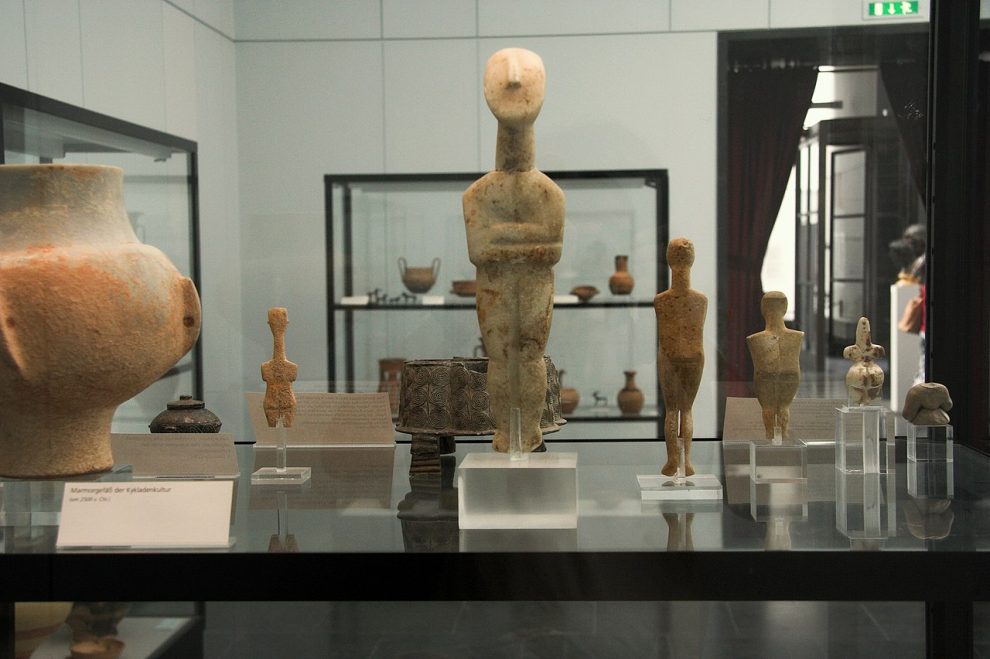
Cycladic Figurines And Vessels (Early Bronze Age), Staatliche Antikensammlungen, Munich — Photo By Zde (Wikimedia Commons) · CC BY-SA 3.0 · No changes made.
Iconic Cycladic Figurines And Folded-Arm Figures
If you’ve seen one Cycladic figure in a book or online, chances are it was a folded-arm figure. These are typically nude, front-facing, and carved in marble with arms crossed over the torso, often in a consistent configuration that becomes a hallmark of the tradition.
Major Styles and Varieties
Within the folded-arm tradition, scholars classify figures into varieties based on proportions and carving conventions. There are several well-known EC II varieties, including Kapsala, Spedos, Dokathismata, and Chalandriani, each with recognizable shifts in silhouette, head shape, shoulder geometry, and the handling of the folded arms.
More Than Marble
It’s easy to let the figurines steal the whole show, but Cycladic Art includes far more than “idols.” Marble vessels, bowls, palettes, and pottery forms belong to the same cultural world and can tell you different kinds of stories, about daily life, craft skill, and the value placed on stone materials. A striking example is the Cycladic marble palette: the Met notes that traces of pigment on similar palettes suggest they were used to prepare colors for application to statuettes and perhaps to human beings. In other words, these objects don’t just sit beside figurines in museum cases; they hint at practices, coloring, marking, maybe even body decoration, that help animate the figurines in their original setting.
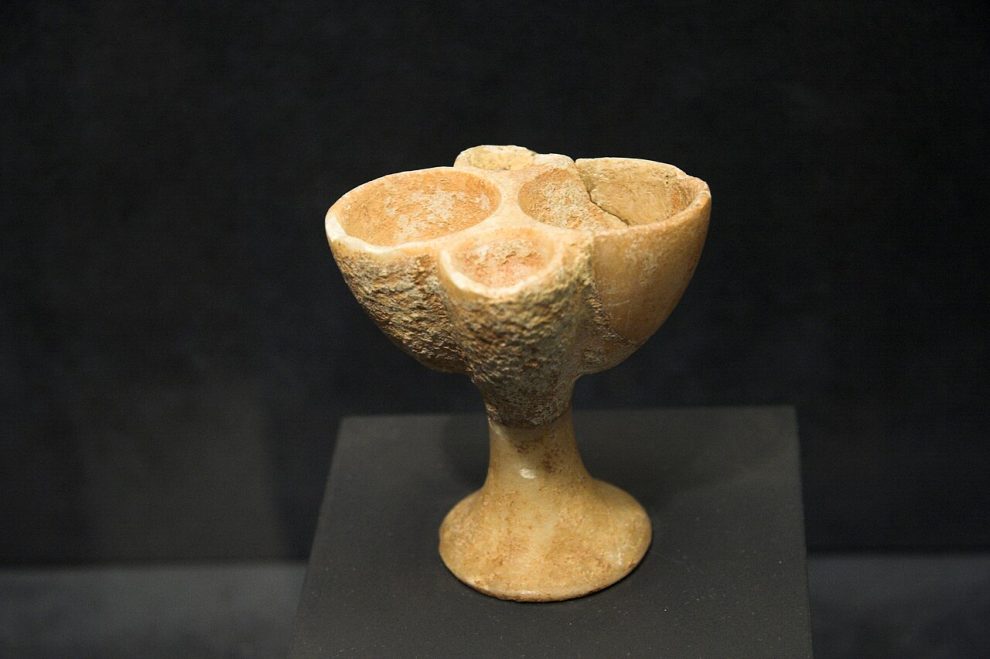
Marble Kernos (EC II, 2800–2300 BC), Museum Of Cycladic Art, Athens (NG 970) — Photo By Zde (Wikimedia Commons) · CC BY-SA 3.0 · No changes made.
Materials And Techniques
Cycladic sculptors worked primarily in marble, a material that can look “pure white” today, especially under museum lighting, but required real technical knowledge: selecting stone, roughing out forms, refining planes, and polishing surfaces so they catch light softly rather than harshly.
Clay work matters too, because pottery and small containers appear in the same archaeological contexts and help round out what Cycladic Culture Art looked like beyond sculpture. Even if you’re mainly here for the figurines, it’s worth remembering that these societies were not carving in a vacuum, they were living, trading, burying, and making a range of objects with different functions.
Color On Cycladic Art and the Idea Of “Ghost Paint”
“Ghost paint” is a useful concept for beginners because it prevents a very common misunderstanding: that Cycladic Art was designed to be minimal and unadorned. While paint often disappears over millennia, evidence like pigment traces and palettes linked to color preparation suggests that painting and surface marking mattered.
So, when you see a smooth face with only a carved nose, try imagining it not as “unfinished,” but as a surface once activated by color, eyes, hairlines, jewelry, or symbolic markings that helped define identity.
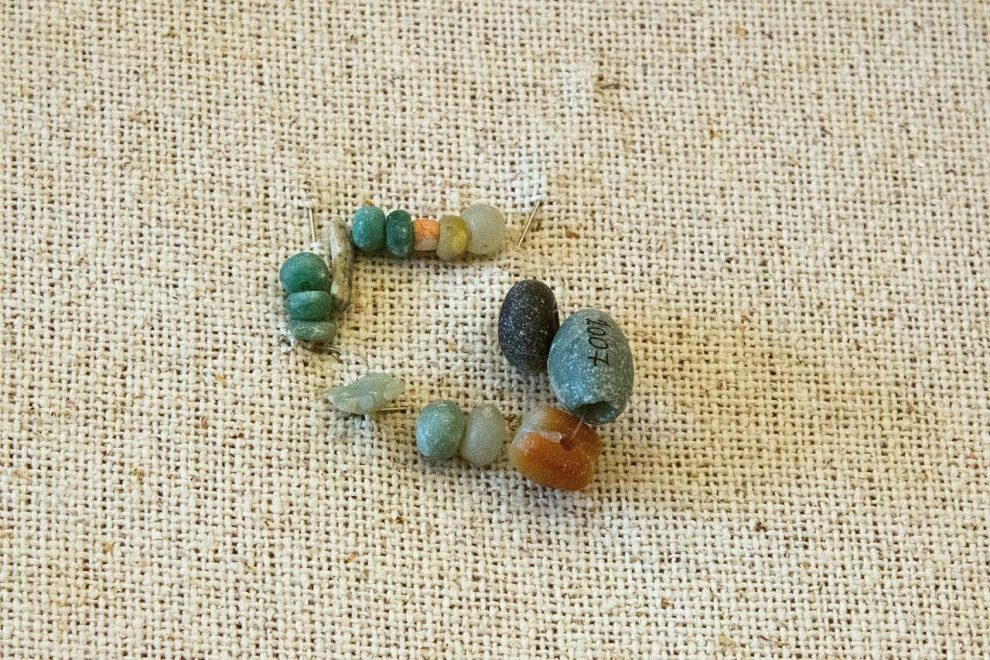
Early Cycladic Jewelry (3200–2300 BC), Archaeological Museum Of Naxos — Photo By Zde (Wikimedia Commons) · CC BY-SA 3.0 · No changes made.
Found In the Tombs
A huge amount of what we know about Cycladic Art comes from burials. We can describe Cycladic tombs as stone-slab-lined pits and notes that what’s remarkable is the presence of elegantly carved marble sculptures found within them.
This matters because context changes meaning. An object found in a grave raises different questions than one found in a household or a workshop. Even when we can’t be sure what a figurine “stood for,” the fact that many were associated with funerary contexts strongly shapes the kinds of interpretations scholars consider plausible.
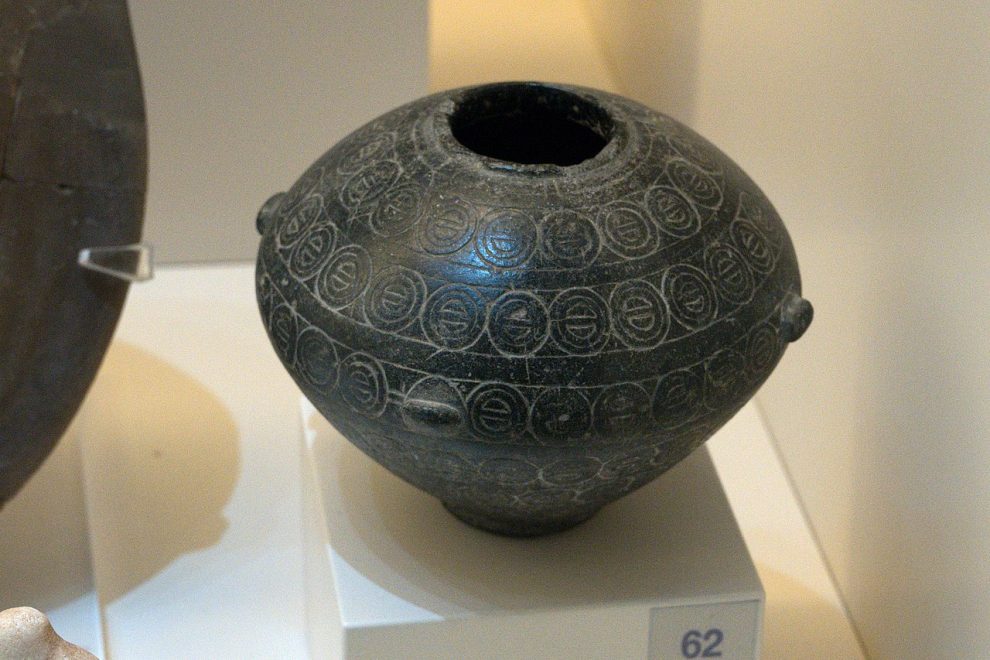
Cycladic Stone Pyxis, Tiryns (2200–2000 BC, EC III), Archaeological Museum Of Nafplio — Photo By Zde (Wikimedia Commons) · CC BY-SA 4.0 · No changes made.
What Did Cycladic Art Mean?
Here’s the honest answer: there is no single agreed explanation for what Cycladic figurines “mean.” With no written records, interpretation relies on archaeological evidence and careful inference, and even reputable sources emphasize uncertainty.
Over the years, scholars have proposed many possibilities: cult images, fertility symbols, representations of the dead, protective figures, toys, social markers, or objects connected to rites of passage. This range of interpretations is limited evidence for specialized cult areas in the Early Bronze Age Cyclades makes simple “idol” narratives risky.
If you want a beginner-friendly way to hold the debate in your head, think of the figurines as multi-purpose objects that could shift meaning depending on context, life, death, ritual, identity, rather than as one fixed symbol across all islands and centuries.
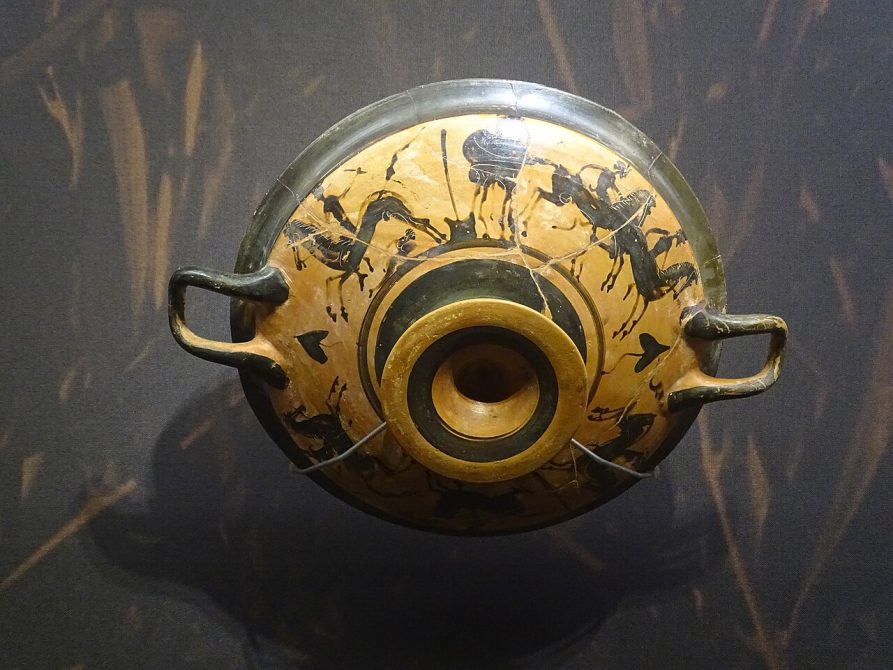
Boeotian Black-Figure Kylix Depicting A Horse-Race Accident (470–450 BCE), Museum Of Cycladic Art, Athens — Photo By Ad Meskens (Wikimedia Commons) · CC BY-SA 4.0 · No changes made.
Looting, Provenance, And Why Context Matters
This section can feel heavy, but it’s essential for understanding Cycladic Art responsibly. Looting destroys context, layers of information about where an object was found, what it was found with, and what its placement suggests about use. We can note that widespread looting has harmed our ability to interpret Cycladic figurines because it removes that contextual evidence.
If you’re reading about Cycladic Art online (or seeing it at auction), provenance is not an “extra.” It’s part of the object’s meaning and a major factor in whether scholars can legitimately learn from it. For a deeper, research-based look at the antiquities market and provenance issues in Cycladic figurines, peer-reviewed studies examine sales, prevalence, and documented histories.
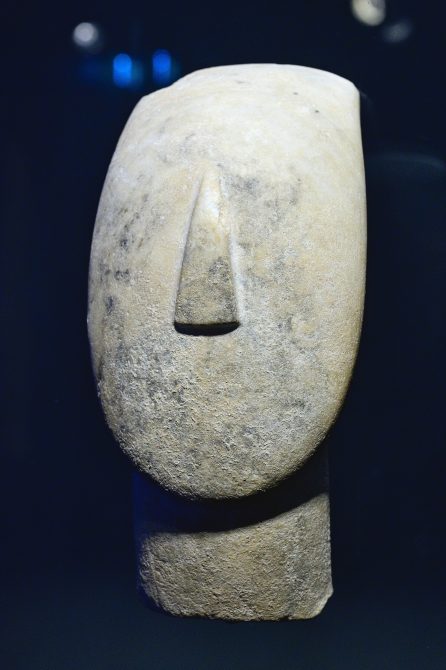
Head Of A Large Cycladic Idol (EC II, Spedos Variety), Museum Of Cycladic Art, Athens (NG 0284) — Photo By Zde (Wikimedia Commons) · CC BY-SA 4.0 · No changes made.
Cycladic Art’s Modern Rediscovery and Influence on Artists
Cycladic figurines were rediscovered in the modern era and quickly attracted attention from travelers, collectors, and, later, artists who saw something powerfully “timeless” in their stripped-down forms. The Met discusses how their meaning has eluded archaeologists since their modern rediscovery, even as their visual appeal helped drive interest and collecting.
That influence is not just a vague art-history claim. Sources commonly connect Cycladic sculpture’s abstracted geometry and clean lines to modern artists and sculptors who admired simplified bodies and strong silhouettes. Christie’s collecting guide explicitly notes Cycladic Art’s enduring appeal and its inspiration for multiple modern and contemporary artists.
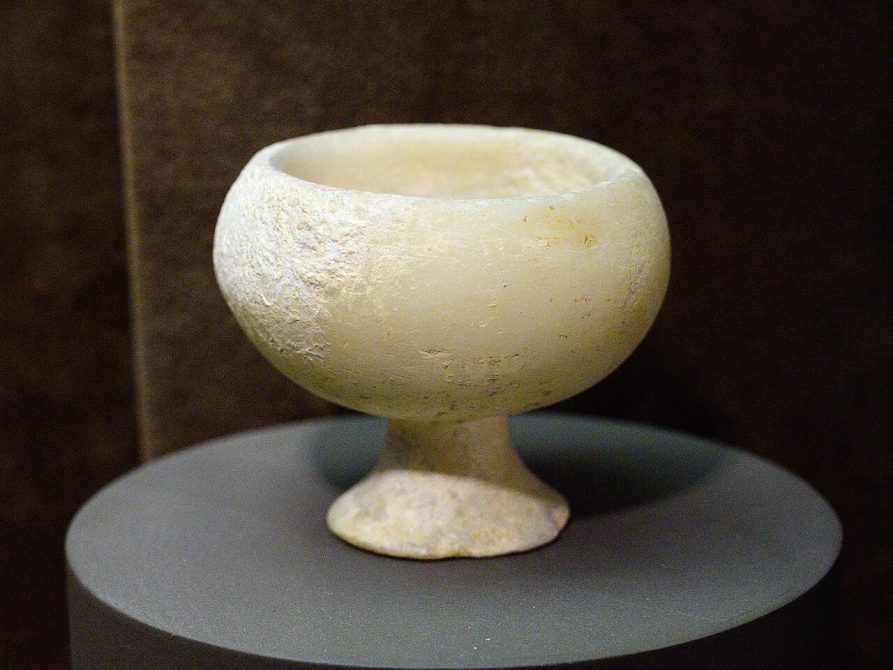
Marble Crater Vessel (EC II, 2800–2300 BC), Museum Of Cycladic Art, Athens — Photo By Zde (Wikimedia Commons) · CC BY-SA 4.0 · No changes made.
Where To See Cycladic Art Today
If you want to understand Cycladic Art quickly, nothing beats seeing it in person, because scale and surface are half the story. The Museum of Cycladic Art in Athens is an obvious starting point, especially for learning Cycladic Culture Art in a Greek context and seeing how the figurines relate to other objects and scholarship.
Outside Greece, the Metropolitan Museum of Art has a significant Cycladic presence and has presented major Cycladic material in dedicated displays and exhibitions.
When you go, try this simple “museum checklist” instead of rushing:
- Notice the pose (arms, legs, head angle) and whether it matches a known variety.
- Look for evidence of surface treatment (polishing, tool marks, repairs).
- Read the label for provenance and findspot information, because context is a form of knowledge, too.
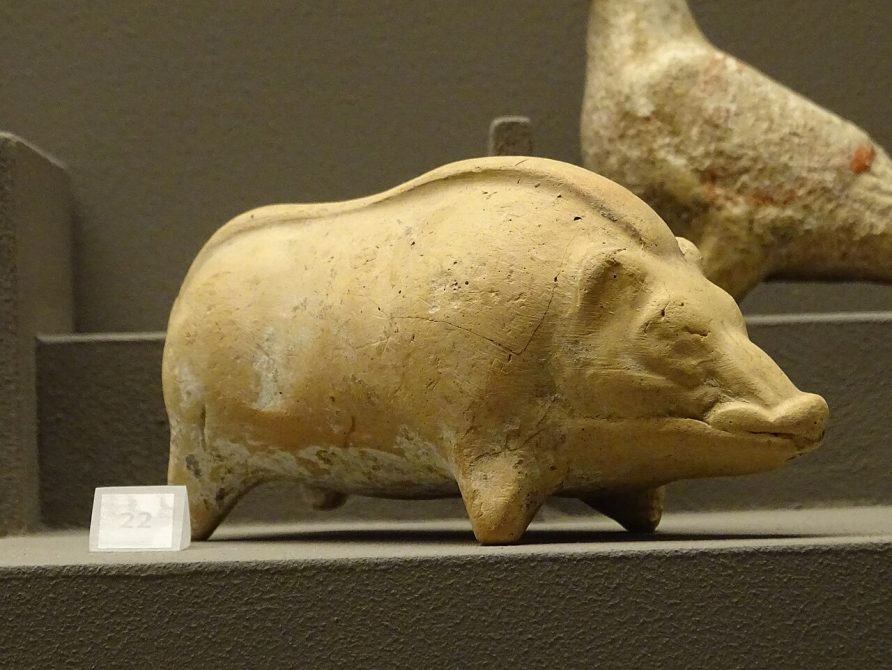
Pig Figurine (Toy), 5th Century BCE, Museum Of Cycladic Art, Athens — Photo By Ad Meskens (Wikimedia Commons) · CC BY-SA 4.0 · No changes made.
Conclusion
Cycladic Art becomes much easier to understand once you stop treating it as a single mysterious style and start seeing it as a living tradition within Cycladic Culture Art, shaped by island networks, evolving across Early Cycladic phases, and expressed through figurines, vessels, and everyday objects.
You now have the beginner’s toolkit: a simple timeline, the key figurine types (especially folded-arm figures), the importance of materials and lost color, and a realistic view of interpretation and debate, alongside the ethical reality that looting has complicated what we can know.
Next time you’re face-to-face with a Cycladic figure, try one final shift in mindset: don’t ask only “What does it mean?” Ask, “What details did time erase, paint, context, placement, and what does the object still manage to communicate anyway?” That’s where Cycladic Art tends to feel most alive.
Image Credits: Featured image — Zde, “EC II Findings, Museum Of Cycladic Art, Athens” (Wikimedia Commons), CC BY-SA 4.0 (no changes).
Source: https://commons.wikimedia.org/wiki/File:EC_II_findings,_Museum_of_Cycladic_Art,_Athens,_190523.jpg | License: https://creativecommons.org/licenses/by-sa/4.0/