
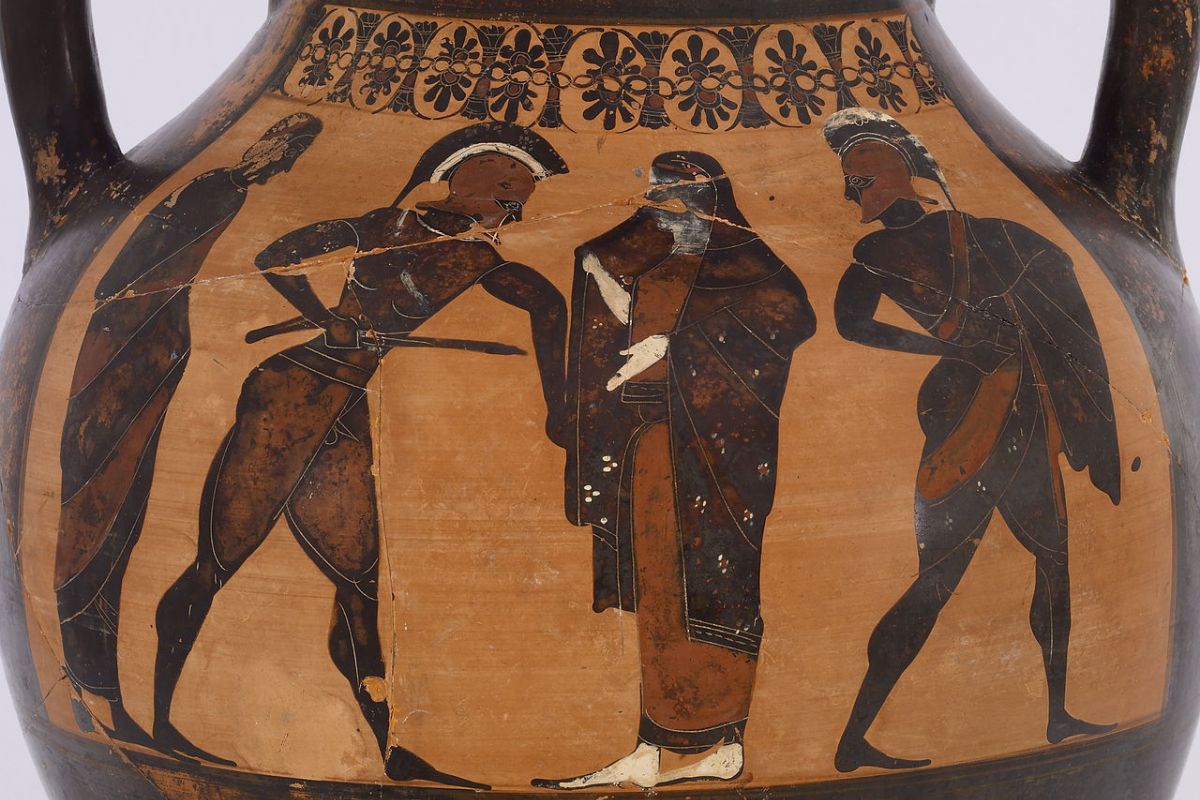
Key Highlights
- Exekias was a master potter and painter in ancient Greece, active between 545 and 530 BC.
- He is celebrated for his work in the Attic black-figure vase painting style.
- His famous works include the “Achilles and Ajax Playing Dice” amphora and the “Dionysus Cup.”
- Exekias was an innovator, creating new vessel shapes and emotionally deep scenes.
- He often signed his Greek vases, giving us insight into his dual role as a craftsman.
- His black figure vases show incredible detail, psychological depth, and masterful composition.
Have you ever thought about the people who made the great pottery in ancient Greece? Exekias was a special artist during that time. He worked in Athens between 540 and 530 BC. Exekias was both a potter and a painter. His vases from ancient Greece are known for showing fine details, new ways of painting, and real feelings in the scenes about myths. He did more than just paint on pottery. Exekias pottery used each vase like a picture to tell strong stories. That’s one big reason why he is one of the most important artists in the history of Greek vase painting and pottery.
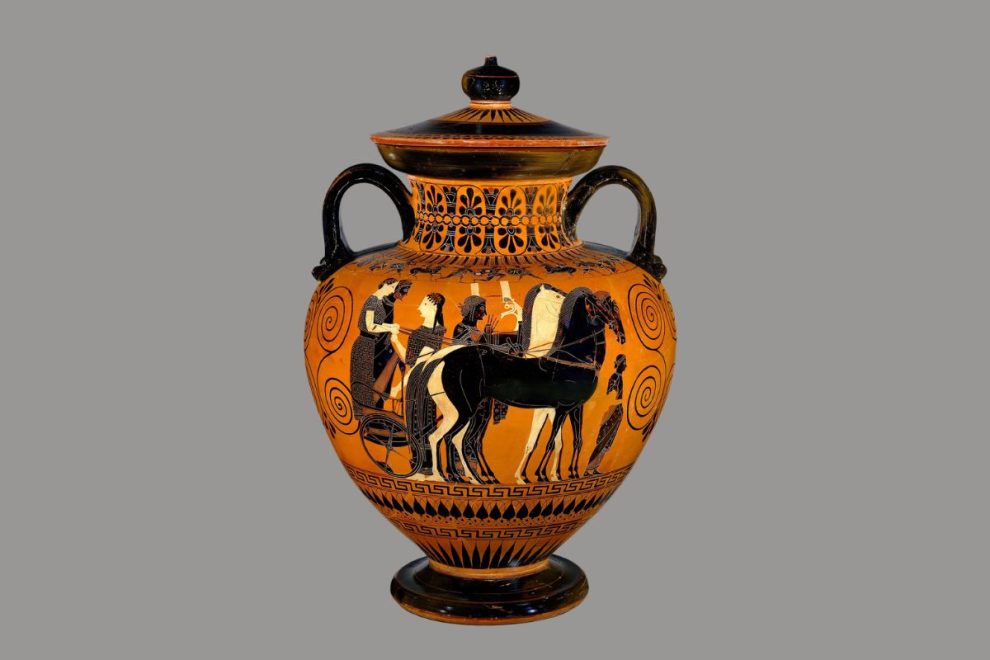
Image by: Metropolitan Museum of Art
Exekias in Archaic Athens
Exekias was a skilled vase painter from ancient Greece. He did his work during the Archaic period, between 550 and 525 BCE. Exekias lived in Athens, and his vases show the busy and lively life in the city. He painted black-figure vases that show scenes from old stories in Greece. These vases often had heroes like Ajax and Achilles. The things Exekias made tell us a lot about what people in Athens believed and how they lived back then. His pottery is not just nice art. It helps us see what life was like during that time in ancient Greece.
Attic Black-Figure Technique in Exekias Pottery
The black-figure technique is the reason Exekias’ pottery stands out. How did he get that look? He painted shapes and people on clay vases with a special slip that turned black when baked in the kiln. To show more details, the artist would cut thin lines into the black slip to let the lighter clay show. This took a lot of care. Any mistake meant you could not fix it.
Exekias knew this technique very well. He went further than others as he used the cutting tool to make clear patterns on clothes and create texture in hair and beards. Also, he tried new things with color, like using a coral-red slip so some backgrounds stand out, as seen on his Dionysus cup. Because of this fresh way of working, his pottery images had much more feeling and detail than before, making black-figure pottery grow into an important style of art.
Exekias as Potter and Painter
One thing that stands out about Exekias is that he signed his work. We can tell if a vase is really made by Exekias by looking at these inscriptions. There are fourteen pieces left today that have his name on them. These show us a lot about his role with vases. Most of these signatures say “Exekias epoíēsen,” which means “Exekias made me.” This tells us he was the potter who shaped the vase. It looks like Exekias may have run a workshop where he watched over how many other vases were made.
Some very special vases show a different signature. These read “Exēkías égrapse kapoíēsé me,” or “Exekias made and painted me.” We only see this inscription on a few of his best masterpieces. This means he was both the potter and the vase painter for these pieces. Why did he sign some in this other way? People think Exekias used this longer signature on vases he felt proud of. He wanted to show that he shaped the whole pot and also painted all the art on it.
Vessel Shapes in Exekias Pottery
Exekias used many types of vessels in his vase painting. The amphora was very common, as people used it to store and carry things. The kylix was a cup used to drink from, and it often had fun scenes painted on it. The calyx-krater had its own special shape, and people used it to mix wine.
Each shape gave Exekias a new way to show his talent. With black-figure vase painting, he made each story come alive with great details. Exekias was so good at bringing together the look and use of every vessel that his work was both nice to see and full of deep meaning.
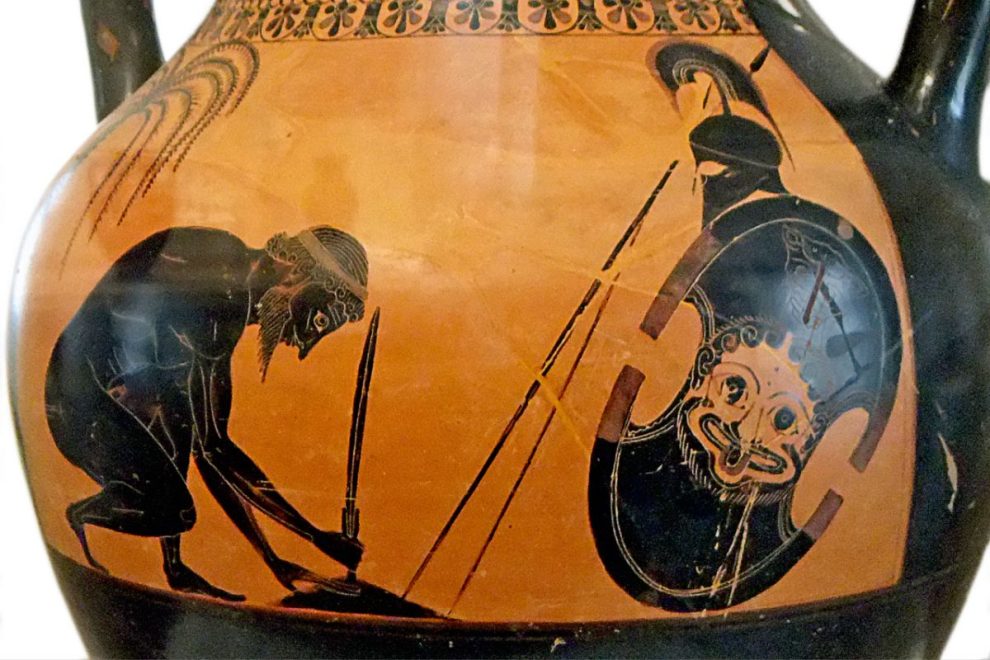
Image by: Ptyx
Heroic Themes in Exekias Pottery
You can see many stories from the Trojan War shown on Exekias’ pottery. Artists like to draw well-known people like Achilles and Ajax. They show dramatic moments between these heroes. The god Dionysus also shows up in scenes that are all about wine and good times. Pottery used at funerals often shows deep respect for the person who has passed away. This makes the pottery into a way to tell a story. Exekias gives these old tales a new look with his black-figure skill. He adds lots of feeling and detail to each painting. This helps people feel close to the old legends of Achilles, Ajax, and the Trojan War.
Achilles and Ajax Playing a Game
One of Exekias’s most famous works is the Vatican amphora. In this scene, you see Achilles and Ajax playing a board game during the Trojan War. This moment is not from any usual story or epic poem. It is a quiet time, showing two heroes sharing space and talking about their board game scores. The inscriptions tell us Achilles gets four, and Ajax gets three.
This amphora feels tense even though the pair are just playing. They keep their armor on and still hold spears. You can see how the war hangs over them. Exekias uses small details to make you feel this: Achilles keeps his helmet on, which shows his control. Ajax lifts his heel a little, like he feels nervous.
The way this vase is put together lets you see the real human side of the heroes. The scene showing him and them was so good that more than 150 copies of this were made later. But the first one from Exekias is still the strongest, thanks to its deep emotions and fine details.
The Dionysus Cup (Dionysos Kylix)
Another well-known piece is the Dionysus Cup, which is a kind of kylix called an “eye-cup.” In ancient Greece, men used these cups to drink wine at a gathering called a symposium. There are big eyes on the outside of the cup. This was a common look for these cups, but the real surprise is inside.
As you tip the cup to drink, you see a picture come to life. The god Dionysos is shown resting on a ship. You can see vines growing up the ship’s mast. There are dolphins swimming near the boat, and they were once pirates who tried to take Dionysos. He used his power to turn them into dolphins. Exekias was the first painter from Athens to paint such an exciting sailing scene inside the cup’s round space.
This black figure art work brings together the cup’s use and how it’s made to look. As you drink at a symposium, you look right at the god of wine inside your cup, sharing the moment with him. The art does not show a harsh fight. It shows that Dionysos has great power and can inspire. That is what makes this greek kylix so famous and loved by many.
Ajax and Penthesileia Narrative Scenes
Exekias had a special talent for showing moments when feelings were strong and when sad things happened. He liked to show the time right before or right after something big happened. This made the scene feel more emotional. One good example is how he drew ajax getting ready to end his life. Exekias shows ajax alone, putting his sword in the ground. It is a quiet and sad moment that happens just before ajax acts.
The way he looks deeper into what is going on inside his characters is a big part of how he worked. He did not just show a story. He tried to get the viewer to feel and think about what was in the hero’s mind. There are other scenes where he shows this skill with emotion, too:
- Achilles and Penthesileia: In this picture, you see Achilles killing the Amazon queen. Their bodies are close together, giving the moment a sad feeling.
- The Return of the Dioscuri: Here you see a gentle family coming together again. It is different than the tense feelings in his pictures of fighting.
- Herakles fighting the Nemean Lion: Many artists painted this, but Exekias fills the scene with a lot of action and detail.
With these scenes, Exekias lets us see all sides of what it looks like to be a hero, from moments of winning to deep loss. He liked to paint the moments where big feelings were present. That sets his art style apart from others.
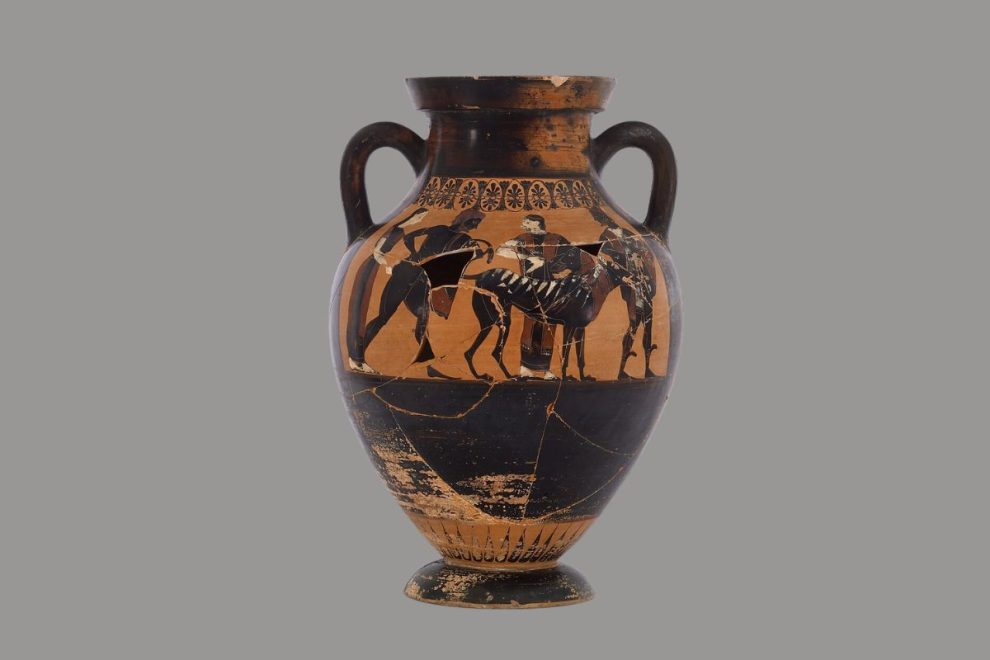
Image by: Walters Art Museum
Style, Composition, and Line
Exekias had a special style that made his pottery different from the rest. He used strong lines and careful patterns to make stories come alive on black figure vases. He put the figures and scenes in a way that made each one full of action and feelings. The curved sides of his black figure vases gave a bold background, so people could see small details from every side. His focus on lines and the way things were placed not only showed how skilled he was, but also made the story in each vase even better.
Legacy of Exekias Pottery in Ancient Greek Art History
Exekias had a big impact on Greek vase painting. Many people say artists who learned from him, like the Andokides Painter, helped start the red-figure technique. The new red-figure style came directly from Exekias’s black-figure paintings. His way of arranging scenes and showing people’s feelings made things better for all the Attic painters after him. The stories he liked, such as Ajax and Achilles playing a game, became normal topics for years in Greek art.
His vases are now kept as top treasures in museums all over the world. Because a lot of his pottery left Greece, you can find it in places outside of the country. Some museums with his works are the Vatican Museums in Rome and the British Museum in London. People also found his pottery buried in Etruscan tombs around Italy. Many scholars and people who view his art still admire what he did. His vases stand out because of the way he tells a story and how well he made them, showing he is one of the great artists of his time.
Parting Thoughts
Exekias was a famous potter and painter from ancient Greece. He made black-figure vases that showed stories about heroes like Ajax and Achilles. These vases still get the attention of people today at museums and inspire many artists. Exekias pottery was characterized by its careful lines and smart ways to fill space, which helped set a standard for vase painting in Greece. He mixed old stories from mythology with his art in a way that still feels important now. His pottery is a big part of culture from ancient Greece and continues to be valued by us all.
Feature Image by: Walters Art Museum