
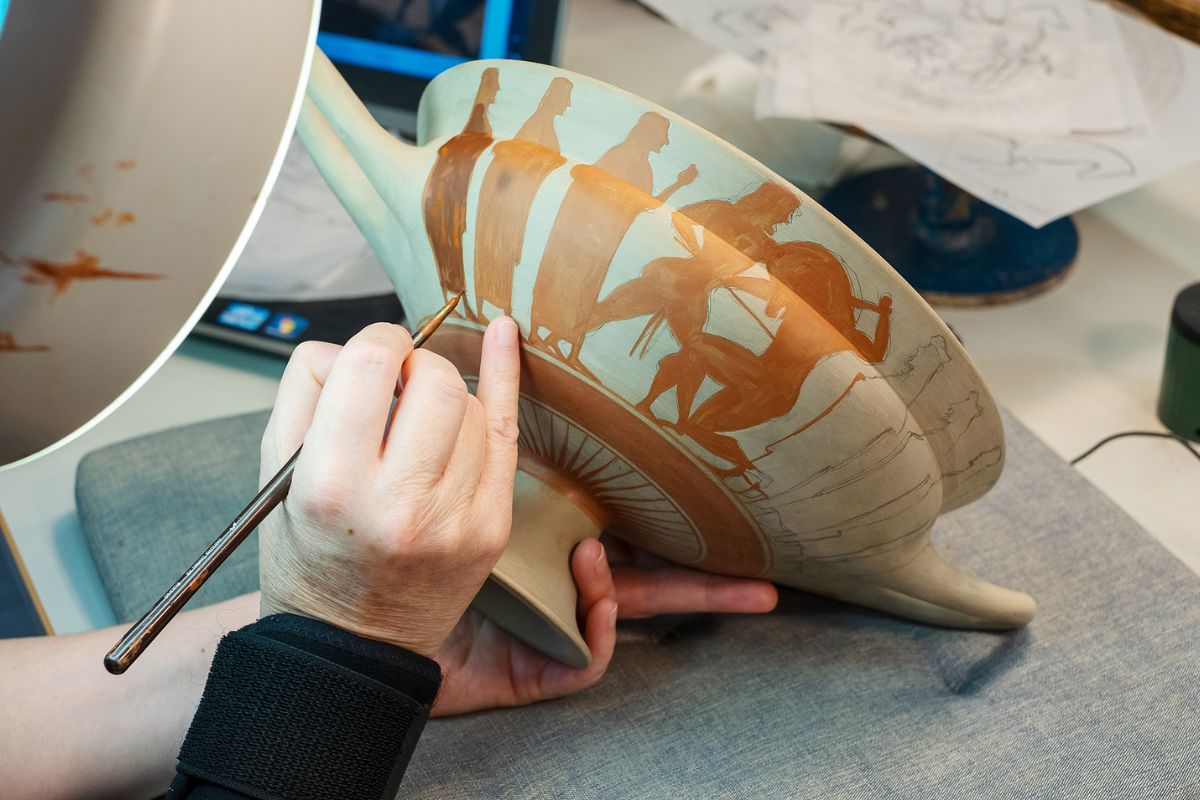
An authentic ancient Greek vase replica uses the same materials and methods as the original.
Iron-bearing clay thrown by hand on the potter’s wheel, decoration painted in a refined clay slip, and a three-stage firing that turns that slip a deep, satin black. Its shape, proportions and figure drawing follow a specific ancient vase closely. Souvenir copies, by contrast, are usually cast in molds and finished with black paint or commercial glaze.
Search for an ancient Greek vase replica and the results are almost entirely product listings: museum shop amphorae, marketplace kraters, and vintage “museum copies” brought home from Athens decades ago. What those listings rarely explain is why two vases that look alike in a photograph can feel so different in the hand. One is a careful study of Athenian craftsmanship. The other is a decorative object that borrows a famous silhouette.
This guide sets out the five qualities that separate a faithful reproduction from a souvenir copy: the clay, the way the vessel is formed, the black surface, the accuracy of shape and proportion, and the quality of the drawing. It then looks at how to choose a vessel as a gift, and at why a well-made replica is the responsible alternative to an antiquity. It is written for collectors, for travelers planning time in Athens, and for anyone looking for a gift with real cultural substance.
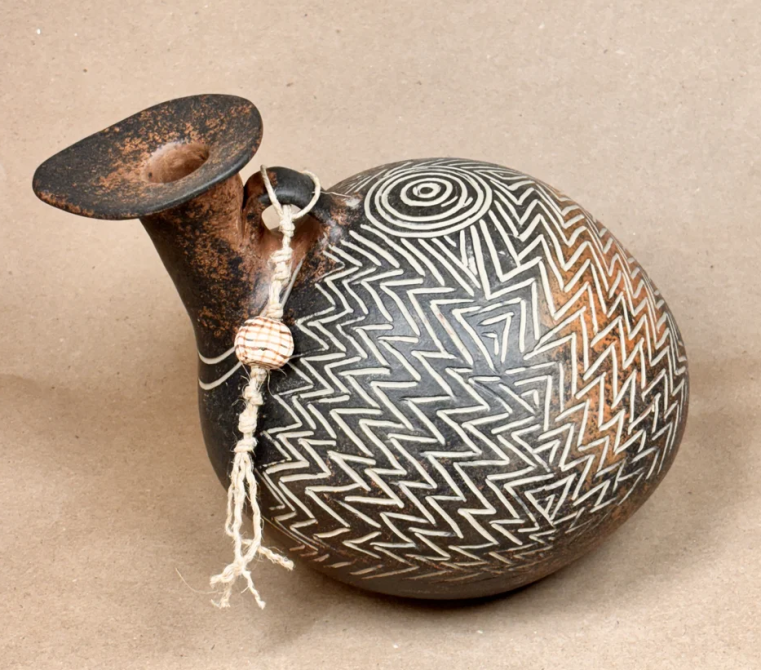
Cycladic Duck Shaped Askos II. Image courtesy of Attic Black Shop.
What Makes an Ancient Greek Vase Replica Authentic?
In a replica, authenticity does not mean age. It means fidelity, both to a particular ancient object and to the way Athenian potters actually worked between the sixth and fourth centuries BC.
A replica can be faithful in appearance alone, or faithful in appearance, material and method together. The second kind is far less common, and it is what knowledgeable buyers have in mind when they look for a museum replica Greek vase. Five questions do most of the work when judging one:
- Clay: Is the body made of fired clay with the warm orange tone of Attic pottery?
- Forming: Was it thrown on the wheel, or cast in a mold?
- Black surface: Is the black a true fired gloss, or paint and glaze?
- Shape: Do the profile and proportions match a known original?
- Drawing: Are the figures drawn with the confidence and conventions of the period?
The sections below take each in turn.

Start With the Clay
Why Attic clay matters
Athenian potters worked with local clay high in iron, which fires to the orange and reddish-tan color associated with Attic vases. That same iron chemistry is what made the famous black possible: decoration was painted in a finely refined, iron-bearing clay slip that changes color in response to the atmosphere inside the kiln. Body and decoration were, in effect, two forms of the same material.
A replica made from pale earthenware, resin, plaster or cast stone cannot reproduce that relationship convincingly, however careful the painting. The Attic Black guide to the origins and characteristics of Attic clay explains why this material shaped the look of Athenian ceramics.
What to look for
- Body color: An even orange to reddish-tan, visible under the foot or inside the mouth of the vessel.
- Weight and sound: Fired clay has a clear ring when tapped lightly; resin and plaster sound dull and feel either too light or oddly dense.
- Transparency from the maker: A workshop that works in the ancient tradition will usually say where its clay comes from and how it is prepared.
Hand-Thrown or Slip Cast?
Ancient Greek vases were thrown on the potter’s wheel. More complex shapes were built in sections: a kylix, for example, was typically formed as a bowl and a stem, joined once the clay had stiffened, with the handles attached separately. Each piece carried small variations in wall thickness and profile.
Most mass-produced souvenirs are slip cast, meaning liquid clay is poured into plaster molds. Slip casting is a legitimate modern technique, and it produces identical pieces quickly and cheaply. It is not, however, the ancient method, and it leaves recognizable traces.
How to tell the difference
- Throwing marks: Faint spiral ridges on the interior, most visible on open or wide-mouthed shapes.
- Seam lines: A fine vertical line running down the body or along a handle points to a two-part mold.
- Uniformity: If a seller offers dozens of pieces that are identical down to the millimeter, they are almost certainly cast.
- Handles: Hand-formed handles show slight irregularities and carefully finished joins where they meet the body.
A handmade Greek pottery reproduction will rarely match its neighbor on the shelf exactly. That small variation is a mark of quality, not a flaw.
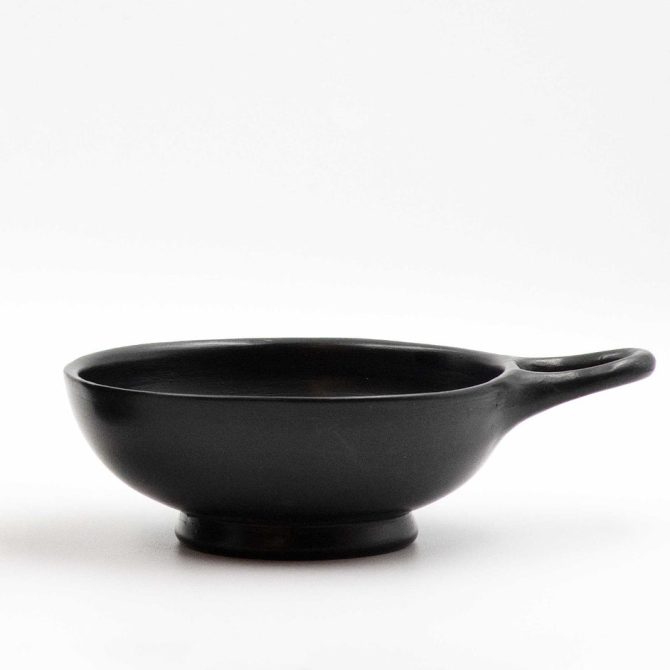
Black-Glazed One-Handler (Monoton), inspired by Attic pottery, ca. 375–350 BCE. Image courtesy of Attic Black Shop.
The Black Gloss: Iron-Reduction Firing Versus Paint or Glaze
This is the most important test of an ancient Greek vase replica, and the one product descriptions most often leave out.
The black on Athenian vases is neither paint nor a glaze in the modern sense. Archaeological scientists describe it as a refined, non-calcareous clay slip high in iron, which becomes a thin, glass-like layer during a three-stage firing:
- Oxidizing stage: With air flowing through the kiln, the iron in both the body and the slip turns red.
- Reducing stage: The potter starved the kiln of oxygen, turning everything black. At peak temperature, the very fine slip sintered into a dense layer that sealed the black iron oxides inside.
- Reoxidizing stage: As air returned, the porous clay body turned red again, while the sealed slip stayed black.
The result is a deep black with a soft, satin sheen that is part of the fired clay surface rather than a coating on top of it. Controlling this process takes years of testing, which is why so few modern workshops attempt it. The article on ancient Greek black glaze and the Attic firing secret covers the science in more depth.
Signs of a genuine black gloss
- A satin, slightly metallic luster, neither glassy and wet-looking nor flat and chalky.
- A very thin layer that follows the surface of the clay, with no pooling at the foot, no drips and no ridges where a brush stopped.
- A clean, crisp border between black and red areas.
Signs of a painted or glazed copy
- Acrylic or enamel paint tends to look plastic, and it can chip or scratch to reveal a different color beneath.
- Commercial glossy glaze looks glassy and often gathers in recesses and around the foot.
- Artificially aged finishes are rubbed, stained or crackled to suggest antiquity. A faithful replica reproduces the vase as its maker intended, or states clearly that it copies the object in its present, weathered condition.
Shape and Proportion
Greek potters worked with a refined vocabulary of forms, each tuned to a purpose: storing, mixing, pouring, drinking or holding perfumed oil. Small changes in proportion alter a vessel’s character entirely. An amphora with a neck that is slightly too short, or a kylix with a bowl that is slightly too deep, reads as wrong to a trained eye even when the decoration is correct.
Questions to ask before buying
- Which original does it reproduce? A true museum replica is based on a specific object, ideally with its period and collection named.
- Do the details match? Compare the foot, lip, handle placement and overall profile with images of the original.
- Is the scale stated? Reduced-scale copies are common and perfectly acceptable, provided the proportions stay true.
For a reference to the main forms and their uses, see the Attic Black guide to ancient Greek vase shapes.

Drawing Quality in Black-Figure and Red-Figure Decoration
Even a perfectly fired vessel falls short if the drawing is weak. The two great Athenian decorative techniques make different demands on the painter, so it helps to know what each should look like.
Black-figure
Black-figure decoration first appeared in Corinth in the early seventh century BC and was soon taken up by Athenian workshops. Figures are painted as black silhouettes, and interior details such as muscles, hair and drapery folds are incised through the gloss to reveal the clay beneath, with touches of added red and white. On a good replica, those incised lines are crisp and confident. Lines painted on in a contrasting color are a shortcut. More on the technique appears in black-figure Greek pottery.
Red-figure
Red-figure decoration, developed in Athens around 530 BC, reverses the scheme. The figures are left in the color of the clay, the background is filled in black, and details are drawn with a brush in slip. Fine, slightly raised contour lines and diluted slip for softer anatomical details are hallmarks of careful work. The guide to ancient Greek red-figure pottery traces how the technique developed.
What good drawing looks like
- Continuous, assured lines without hesitation, gaps or visible overpainting.
- Anatomy, drapery and gesture that follow the conventions of the period being copied.
- Greek inscriptions rendered as real letters, not decorative marks.
- A composition that fits the curve of the vessel the way the original does.
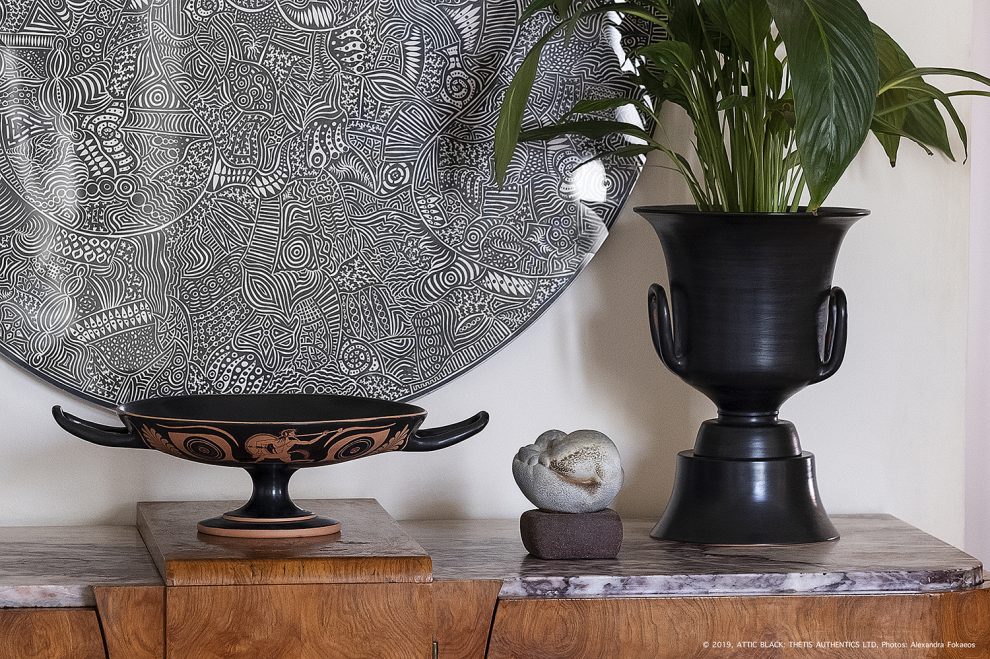
kylix and kantharos
How to Choose a Greek Vase Replica as a Gift
When the goal is an authentic Greek vase gift, the shape matters as much as the decoration, because each form carries a story about daily life in ancient Athens. A few pairings work particularly well.
For a wine lover: kylix or skyphos
The kylix, a shallow, two-handled cup on a slender stem, was the classic drinking vessel of the symposium, the Greek drinking party. Its interior often held a painted scene that appeared as the wine was drunk. The skyphos is a deeper two-handled cup, sturdier and more informal. Either makes a natural gift for someone who appreciates wine and its history. The article on kylix pottery and ancient Greek wine cups tells the story behind the form.
For a small keepsake: lekythos or aryballos
The lekythos is a slender, single-handled flask for oil, closely associated with Athenian funerary ritual, particularly in its white-ground form. The aryballos is a small, rounded oil flask linked with athletes and the gymnasium. Both are compact, easy to carry home and elegant on a desk or bookshelf. Learn more in what is a lekythos.
For a statement piece: amphora or krater
The amphora, a two-handled jar for storing and transporting goods, is the most recognizable Greek vase. Panathenaic amphorae filled with olive oil were awarded as prizes at the Panathenaic Games in Athens. The krater is a wide mixing bowl in which wine was blended with water at the symposium. Larger vessels like these show figure drawing at full scale and suit a home, an office or a milestone gift.
Practical gift considerations
- Shipping and packing: Ask how fragile pieces are protected in transit.
- Intended use: Ask the maker about contact with food and liquids, since many reproductions are made for display.
- The story: A short card naming the shape, its use and the original it follows makes the gift far more meaningful.
The Attic Black gifting collection and its black glazed ware are good starting points for gifts arranged by form and occasion.

The Ethics of Buying a Replica Instead of an Antiquity
The market for genuine ancient vases has a difficult side. Looting strips objects from their archaeological context, destroying the information that tells scholars how and where they were used. Greek law protects antiquities found on Greek territory and prohibits their export without official permission, and the International Council of Museums publishes a Red List of Greek cultural objects at risk to help customs officers and dealers recognize trafficked material.
A well-made replica answers the desire to live with Greek art without feeding that trade. It also allows a design that survives only in a museum case to be held, studied and used in a home.
Honesty is part of the bargain. A reputable maker always sells a replica as a modern piece. Vague claims of age, “excavated” finishes sold without clear documentation, or reluctance to state where and how a piece was made should all prompt further questions.
Practical tips for travelers
- Buy from studios or shops that clearly identify each piece as a modern reproduction.
- Keep the receipt and any description or certificate stating that the piece is a modern copy, which makes customs conversations straightforward.
- Favor makers with recognized museum collaborations. Greece’s Ministry of Culture also oversees an official workshop that produces certified copies for sale in museum shops.
Finding a Greek Pottery Shop in Athens
For visitors, seeing replicas in person is the surest way to judge the gloss, the weight and the drawing. When choosing a Greek pottery shop in Athens, look for a workshop that can explain its clay, its forming method and its firing, rather than a shop stocking near-identical pieces from many suppliers.
Attic Black, launched in 2012 as the ceramic brand of the THETIS Authentics workshop, makes each piece by hand using Attic clay and the three-stage iron-reduction firing of the classical potters. Its work has been commissioned by Greek museums, including the Acropolis Museum and the Benaki Museum. Pieces can be seen at the Attic Black shop in Plaka or browsed online in the decorated classical pottery collection. The studio near the Panathenaic Stadium also welcomes visitors by appointment through its workshop visits and training program, where the firing process can be seen up close.

Choosing an Ancient Greek Vase Replica With Confidence
The right ancient Greek vase replica respects its original in material, method and line. Iron-bearing clay, thrown by hand, gives the body its color and character. A true black gloss, produced through three-stage firing rather than paint or glaze, gives the surface its depth. Accurate proportions and confident drawing complete the picture, and a clear statement of what the piece is, and which original it follows, protects both the buyer and the archaeological record.
Keep those criteria in mind, and how to choose a Greek vase replica becomes a matter of looking closely rather than guessing. The result is an object worth keeping, giving and living with for many years.
Frequently Asked Questions
What is the difference between a replica and a reproduction?
The terms are often used interchangeably. “Replica” usually implies a close copy of a specific ancient object, while “reproduction” can also describe a piece made in the style of a period without copying one original exactly.
Can a Greek vase replica be taken out of Greece?
Yes. Modern replicas are not antiquities. Buying from a reputable maker and keeping the receipt or any certificate describing the piece as a modern copy makes this simple to show if asked.
How can you tell if a Greek vase has a real black gloss?
A true Attic-style gloss has a satin, slightly metallic sheen, sits as a very thin layer on the clay and shows no drips, pooling or brush ridges. Paint looks plastic and can chip, while commercial glaze looks glassy and wet.
Which Greek vase shape makes the best gift?
It depends on the recipient. A kylix or skyphos suits a wine lover, a lekythos or aryballos makes a compact keepsake, and an amphora or krater works as a statement piece for a home or office.