
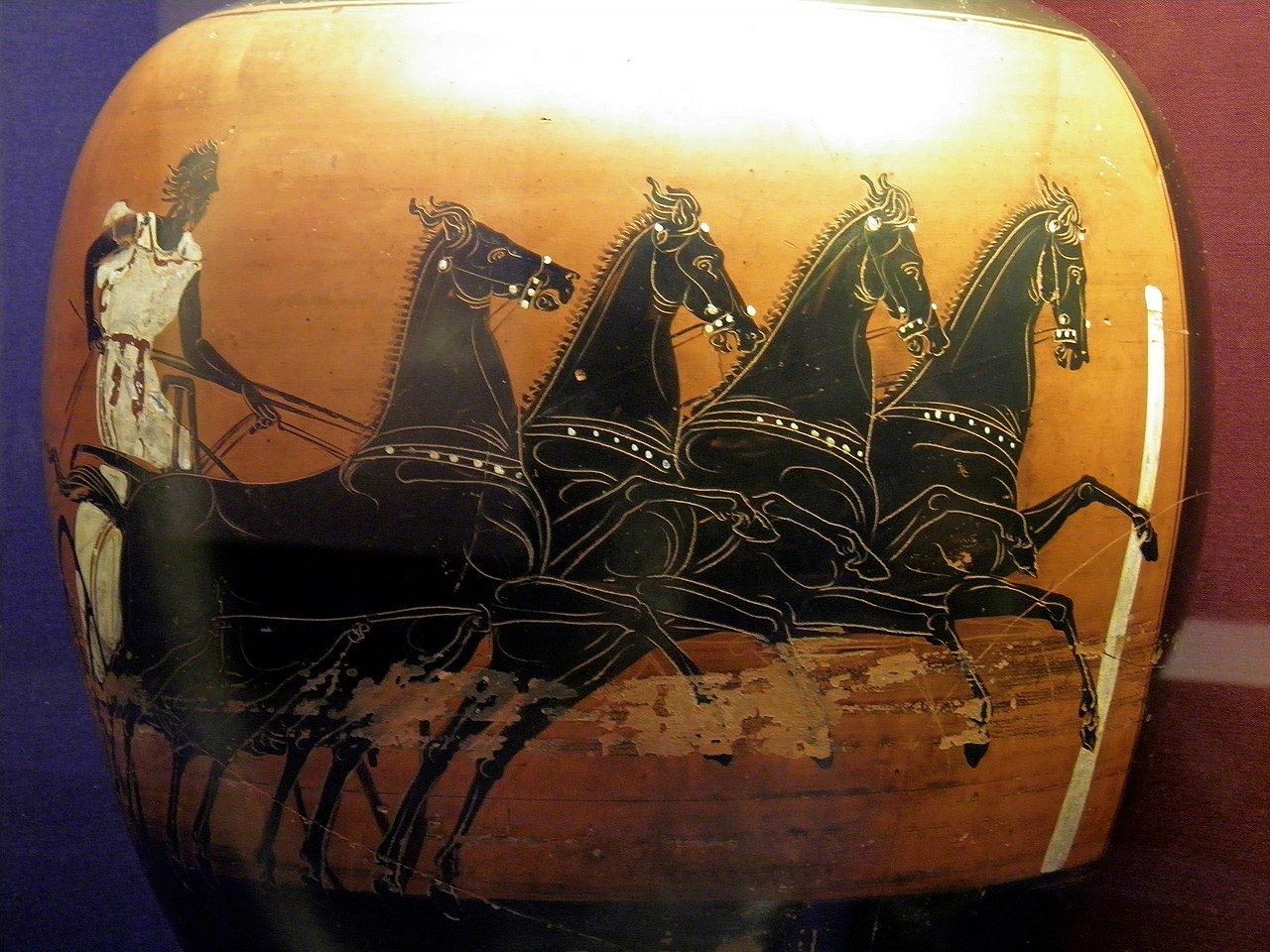
The Panathenaic amphora was Athens’ official prize vase, and this guide covers its origins, Athena imagery, and athletic scenes.
A Panathenaic amphora isn’t just “a nice ancient Greek vase.” It’s closer to a certificate of victory you could carry in your arms, an official Athenian prize given at the Panathenaic Games, filled with valuable olive oil from sacred groves and stamped (visually and often literally) with the city’s identity. The result is a rare object where sport, religion, politics, and art all meet on one surface.
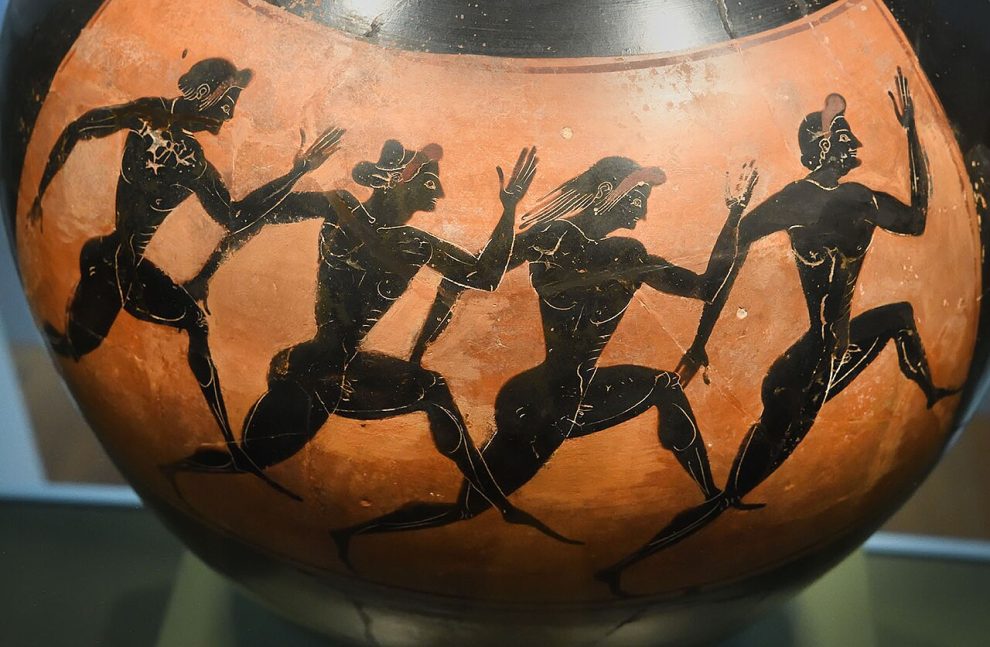
Prize Panathenaic amphora (Allard Pierson Museum). Photo by Dosseman, Wikimedia Commons, CC BY-SA 4.0.

What Is a Panathenaic Amphora?
A Panathenaic amphora (often called a Panathenaic prize amphora) is a large ceramic vessel made in Athens/Attica specifically to be awarded to winners at the Panathenaic Games. Unlike most painted pottery, which could be private, fashionable, or experimental, these amphorae follow “official” rules: a consistent shape, a consistent message, and a consistent iconography that announces, in effect, this prize comes from Athens.
Origins of the Panathenaic Amphorae
The Panathenaic amphorae begin in the Archaic period, and scholars often point to the mid–6th century BCE as the point where the form becomes clearly established and increasingly standardized. By around 530 BCE, the canonical shape and the “Athena + event” formula are firmly in place, and the state commissions large batches from leading workshops.
Function of the Panathenaic Prize Amphora
These weren’t empty trophies. The amphorae were filled with olive oil, high-quality oil linked to Athena and the sacred groves of Attica, making the prize both symbolic and extremely practical. Some sources describe a standardized amount of oil (often noted as a metretes, roughly forty-two quarts) awarded in these vessels.
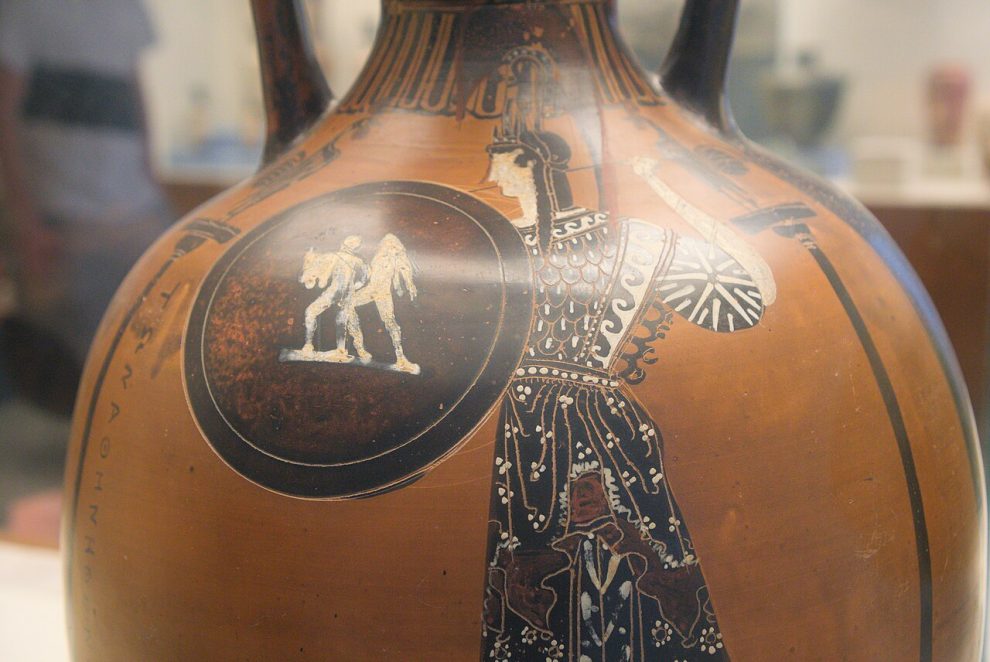
Detail of Athena on a Panathenaic amphora (British Museum). Photo by Caeciliusinhorto, Wikimedia Commons, CC BY-SA 4.0.

Iconography of the Panathenaic Amphora Athena
If you’re trying to identify a Panathenaic amphora vase, the quickest clue is the front side: Athena, armed and advancing, usually shown in the “Promachos” (fighter/defender) mode. She isn’t there for decoration, she’s the city’s patron and the amphora’s official seal in image form.
Symbolism and Attributes of Athena
On many examples, Panathenaic amphora Athena appears with spear and shield, wearing a helmet and the aegis (often with a gorgoneion/Medusa image). The black-figure method, silhouetted figures with incised detail, lets artists emphasize crisp armor lines, patterned textiles, and the strong forward stance that reads as protection, power, and civic pride. In other words: this isn’t a quiet Athena. It’s Athens presenting itself as formidable.
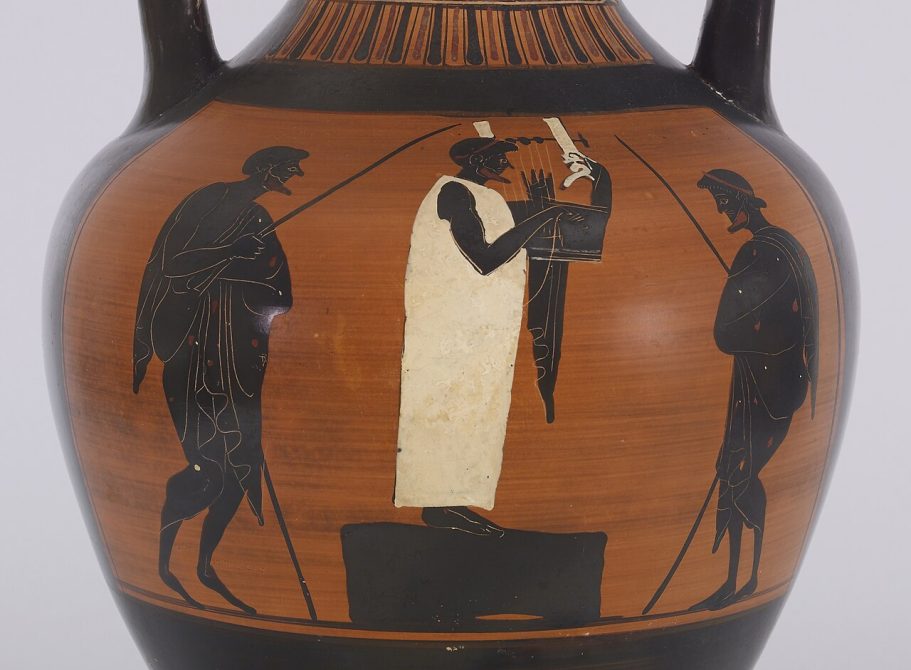
Greek black-figure Pseudo-Panathenaic Amphora (Walters Art Museum 48.2107), detail. Courtesy of Walters Art Museum, via Wikimedia Commons, CC BY-SA 3.0.

The Black Figure Panathenaic Amphora Tradition
One of the most fascinating “rules” is that the black figure Panathenaic amphora tradition continues long after black-figure falls out of fashion in elite vase-painting. While other vases move into red-figure and new visual trends, Panathenaic prizes keep the older technique, because tradition is part of the point: the prize should look official, recognizable, and continuous across generations.
The Black Figure Panathenaic Amphora 333–332 BC
A great late example is the British Museum’s prize amphora dated 333–332 BC (archonship of Nikokrates). It’s explicitly recorded as black-figure, and it still follows the core template: Athena between columns on one side, and a foot-race scene on the other. Even in this late period, the vase is still doing what Panathenaic prizes always did, broadcasting Athens, Athena, and the victory, while showing subtle shifts in proportions and manner as styles evolve.
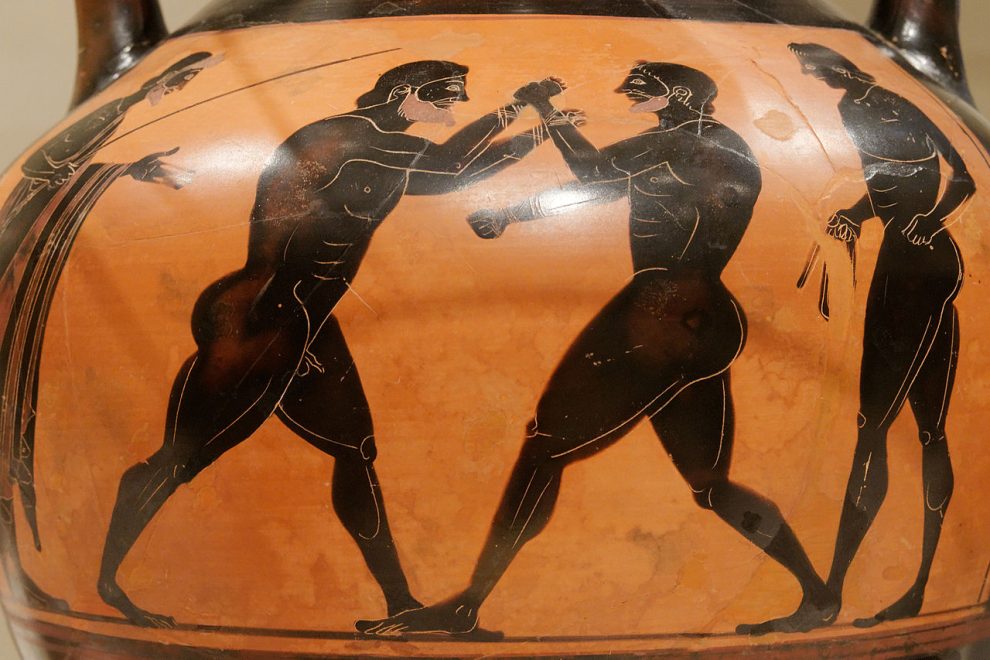
Boxers (side B) from an Attic black-figure amphora of Panathenaic shape (Met 06.1021.51), c. 520 BC. Photo by Marie-Lan Nguyen, via Wikimedia Commons, CC BY 2.5. No changes made.

Athletic Scenes on the Panathenaic Vase
Turn the vase around and you get the “specifics”: the event for which the prize was awarded. This reverse side is why a Panathenaic vase can feel unexpectedly documentary. You’re not only looking at an artwork, you’re looking at what Athens chose to commemorate as worthy of reward.
Events Commonly Depicted on Panathenaic Amphorae
Common scenes include footraces (like the Met example dated ca. 530 BCE), boxing, chariot events, and other athletic competitions. In some cases, you can spot the type of contest quickly by the equipment and stance: runners with bent arms and forward lean; boxers with guarded posture; chariots or horse events signaled by the team and vehicle.
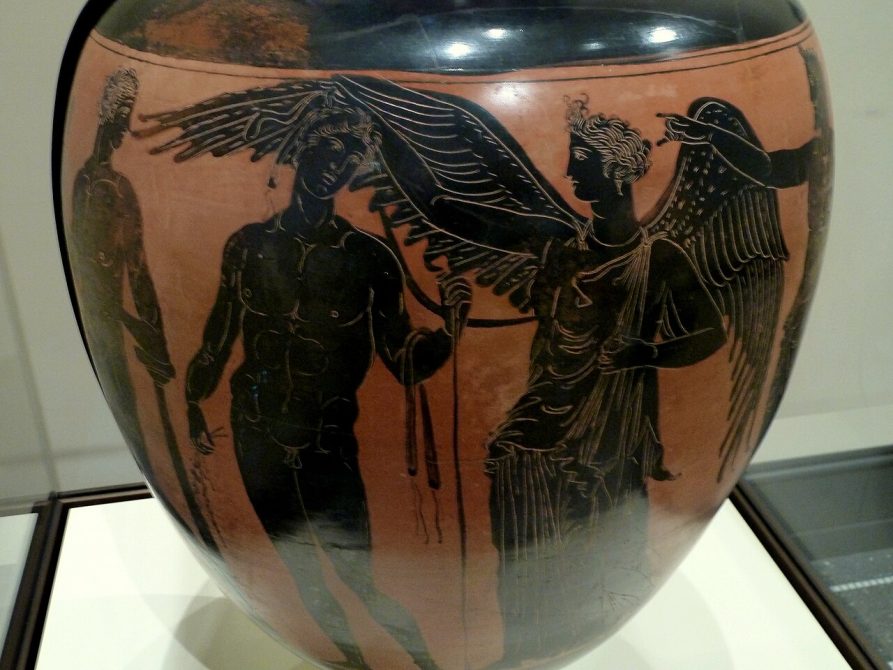
Panathenaic prize amphora with athlete and Nike (Getty Villa 93.AE.55), Athens, 363–362 BC. Photo by Dave & Margie Hill / Kleerup, via Wikimedia Commons, CC BY-SA 2.0. No changes made.

Shape and Craftsmanship of the Panathenaic Amphora Vase
The Panathenaic amphora vase has a distinctive silhouette, narrower neck, strong shoulders, and a foot, designed for both carrying and display. Size also matters: these are not small shelf pieces. They’re meant to look and feel like prizes, and many surviving examples are around 60, 70 cm tall (and sometimes more).
Workshop Practices and Athenian Potters
Because the city commissioned these in quantity, workshops had to balance consistency with artistry. The template (Athena side, event side, and official look) stays stable. Painters and potters still compete through sharper incision, better proportions, and more lifelike movement. The Met’s Panathenaic prize amphora, which scholars attribute to the Euphiletos Painter, shows that competitive skill. It uses firm incision, clear silhouettes, and a confident athletic scene.
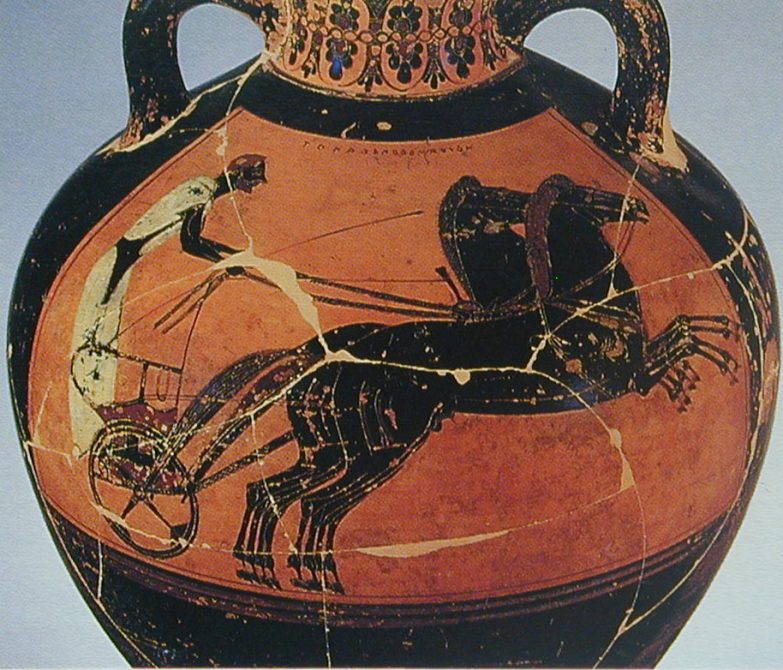
Panathenaic amphora (Museo Archeologico Nazionale, Florence 97779), black-figure, c. 550–540 BC. Photo by Fer.filol via Wikimedia Commons (Public Domain). No changes made.

Distribution and Use of the Panathenaic Vase
Winning one of these meant you held something valuable enough to keep, display, dedicate, or monetize. Some victors (or their families) treated amphorae as prestige objects, grave goods or sanctuary dedications, while others likely sold them, which helps explain why examples turn up far from Athens.
Olive Oil as a Valuable Commodity
The olive oil inside was a prize you could use or convert. In practical terms, olive oil powered daily life, food, cleaning, and lighting, while high-quality oil was also a tradeable commodity. So the Panathenaic prize worked on two levels: public glory (the vase) and private benefit (the oil).
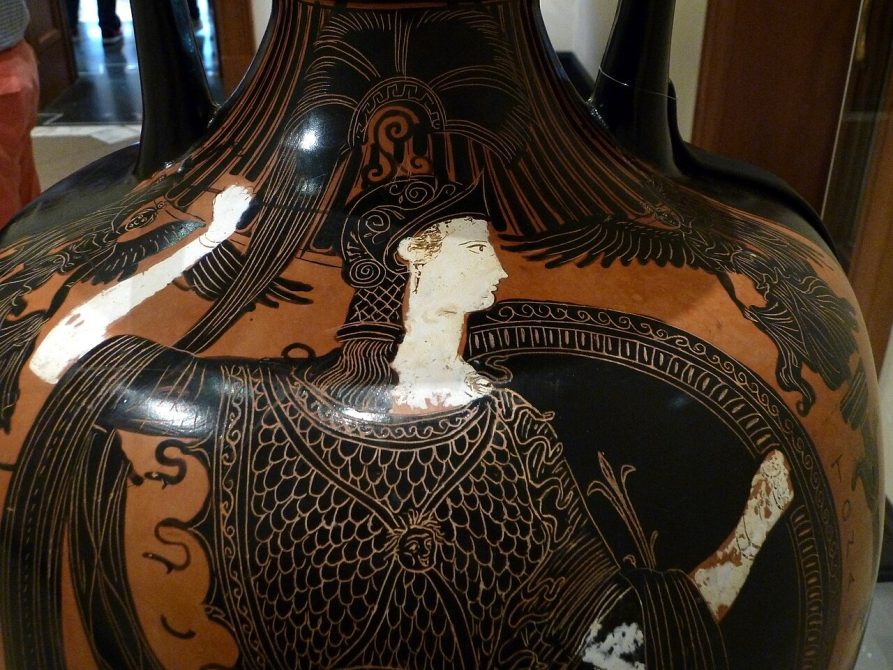
Panathenaic amphora 93.AE.55 (reverse), Getty Villa Collection. Photo by Dave & Margie Hill / Kleerup, via Wikimedia Commons, CC BY-SA 2.0. No changes made.
_-_Getty_Villa_Collection.jpg)
Famous Panathenaic Amphorae in Museums Today
Because Panathenaic amphorae are state-style “fixed points” (shape, Athena formula, event panel, and sometimes dated officials), they’re prized by museums and researchers. They let us compare artistic hands across time and connect objects to historical calendars when archon names appear.
Panathenaic Amphorae at the Met, British Museum, and Harvard
- The Met (New York): A well-known Panathenaic prize amphora dated ca. 530 BCE, attributed to the Euphiletos Painter, with Athena on the obverse and a footrace on the reverse, an early, clear example of the prize format.
- The British Museum (London): A black-figure prize amphora dated 333–332 BC (archonship of Nikokrates), showing Athena between columns and runners on the reverse, perfect for illustrating how late the “official” black-figure tradition continues.
- Harvard Art Museums (Cambridge): Their collection includes Panathenaic prize amphorae that emphasize Athenian civic identity through Athena imagery and the standard prize-vessel concept.
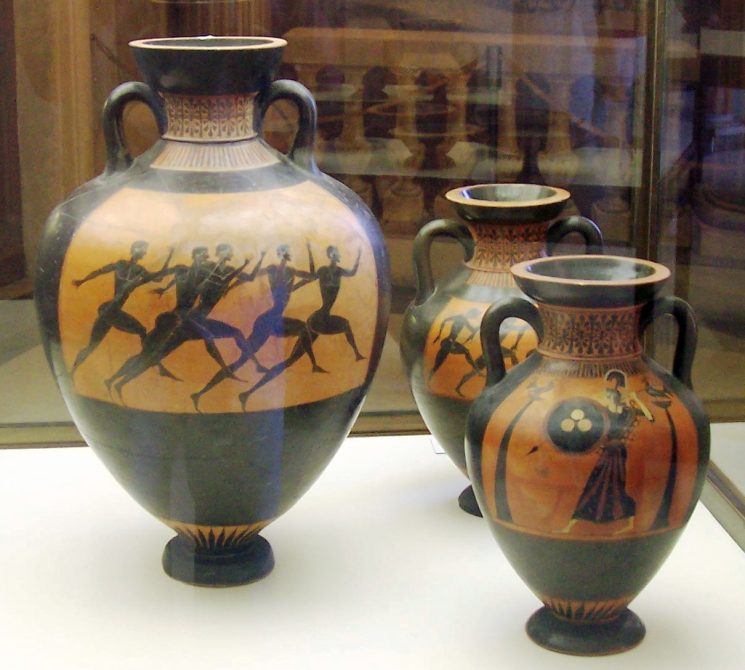
Panathenaic amphora (Vatican Museums). Photo by HombreDHojalata, via Wikimedia Commons, CC BY-SA 3._

Conclusion
The Panathenaic amphora endures because it’s so much more than pottery. Athens made it a state prize, a religious offering in oil form, a record of athletic culture, and a controlled visual message about Athena and the city. You can approach it through art history, ancient sport, or Athenian identity. The Panathenaic amphorae reward close looking. Their rules stay consistent, but the details reveal human hands and ambition.
Key facts to remember when spotting a Panathenaic amphora
Look for Athena armed on one side, the athletic event on the other, black-figure technique even in later centuries, and (often) the idea of an official Athenian prize tied to sacred olive oil.
Featured image credit: <a href=”https://www.flickr.com/people/carolemage/”>Carole Raddato</a> via <a href=”https://commons.wikimedia.org/wiki/File:Panathenaic_prize_amphora_of_a_chariot_race,_Made_in_Athens_about_410%E2%80%93400_BC,_found_at_Taucheira_in_Cyrenaica,_modern_Libya,_Winning_at_the_ancient_Games,_British_Museum_(7642694662).jpg”>Wikimedia Commons</a> (<a href=”https://creativecommons.org/licenses/by-sa/2.0/”>CC BY-SA 2.0</a>). No changes made.